

You know that feeling when your brain goes completely blank? You’re sitting at your desk, ready to create something meaningful, but nothing comes. The cursor blinks. The page stays empty. It’s frustrating, and honestly, it happens to everyone. Whether you’re a writer, a designer, or just someone trying to think outside the box, that creative wall feels very real. A random concept generator exists exactly for moments like this to pull you out of that mental fog and push you toward something fresh.
This article gives you everything you need to use a random concept generator like a pro. You’ll find ready-to-use AI prompts for every creative purpose, along with practical strategies to turn random ideas into actual projects. Every section includes prompts you can copy and paste right now. Keep reading your next big idea might be one click away.
Random Idea Generator
A good random concept generator doesn’t just throw words at you. It connects themes, emotions, and contexts in ways that feel surprising but usable. When you need a creative spark for writing, business, or art, this section’s prompts give your imagination the exact push it needs. The best random ideas feel slightly unexpected yet completely right and that’s what these prompts aim to deliver every time.
- A random idea generator works by combining unrelated concepts into one cohesive, creative starting point.
- It helps writers overcome writer’s block by introducing prompts they’d never naturally generate alone.
- Entrepreneurs use it for business concepts, product names, and unconventional marketing angles.
- Content creators rely on it for fresh blog post topics, video ideas, and social media themes.
- The randomness itself is productive it activates neural pathways that structured thinking often ignores.
- Teachers use idea prompts to spark student creativity during brainstorming sessions.
- Artists and designers use it to find unexpected visual themes and aesthetic directions.
“A retired lighthouse keeper in 2087 discovers a waterproof journal washed ashore containing tomorrow’s newspaper. Every page reveals a disaster he has 24 hours to prevent, but the cost of each intervention erases one memory of his late wife. He must decide which future and which past is worth preserving.”
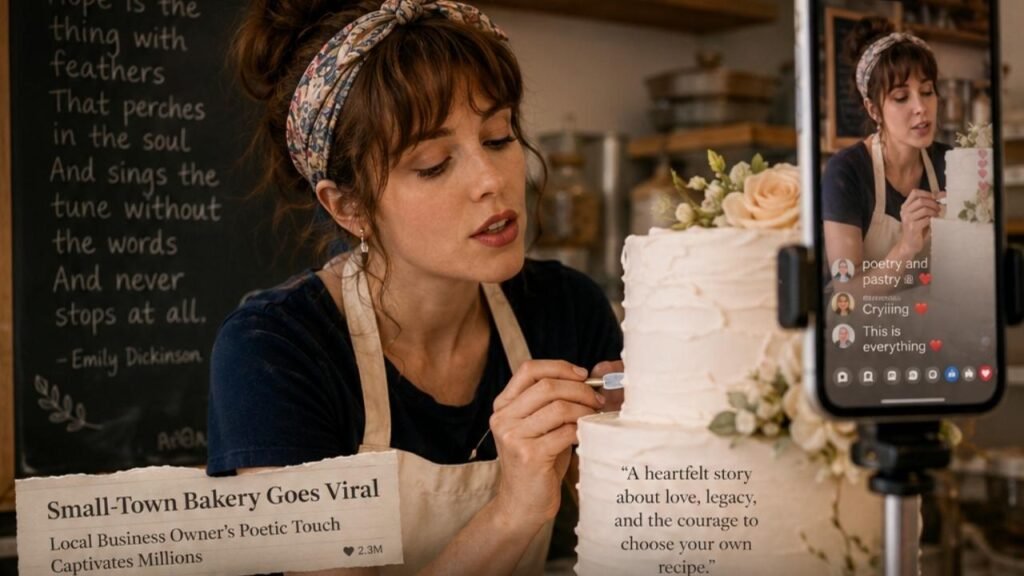
“A small-town bakery accidentally goes viral after a customer films the owner reciting poetry while decorating wedding cakes. The resulting fame attracts a predatory food-network producer who wants to turn the bakery into a franchise. The owner must choose between staying true to her craft and saving the business her grandmother built from nothing.”
“An underground society of professional dreamers is hired by governments and corporations to dream specific solutions to waking-world problems. When one dreamer discovers a recurring figure across three separate clients’ assignments, she starts to question whether she’s solving problems or being used to create them.”
“A color-blind artist invents an AI tool that translates sound frequencies into color palettes. He creates a masterpiece based entirely on his mother’s laugh, then learns the painting has been purchased anonymously for a record-breaking sum. The buyer’s identity leads him down a rabbit hole connecting his mother’s past to a classified government experiment.”
“Two rival urban farmers on adjacent Brooklyn rooftops spend three years competing for a local sustainability award. When a shared pest destroys both their crops the same night, they must collaborate or lose their grants. What begins as a reluctant alliance grows into the most innovative community garden the city has ever seen.”
Extended Detailed Prompt (400 words):
“A former marine biologist named Sora Chen has spent seven years at a remote Arctic research station studying bioluminescent jellyfish. She documents a new species that appears exclusively on moonless nights and produces a light frequency no known instrument can measure. Back in civilization after a funding cut forces the station’s closure, Sora struggles to translate her discovery into language that academic journals will accept. The data exists. The photographs are real. But the frequency readings fall outside every established scientific scale, which means peer reviewers dismiss the paper without reading beyond the abstract.
Desperate, Sora submits her findings to an independent science podcast run by a journalist named Marcus Webb, who is known for covering fringe research with rigorous skepticism. Marcus initially approaches the story with the intent to debunk it. Over three recorded interviews, he begins to see inconsistencies not in Sora’s data, but in the official scientific record itself. Entries from a 1973 naval research program mention a similar frequency detected in deep-sea communication experiments, and those records have been systematically redacted from public archives.

As Sora and Marcus dig deeper, they discover the frequency isn’t just unmeasurable it’s a carrier signal. Something has been transmitting on that exact wavelength from a point four kilometers below the Arctic seabed for at least fifty years. The jellyfish aren’t producing the light. They’re responding to it.
The story widens into a geopolitical thriller when a Norwegian energy company begins exploratory drilling in the exact coordinates where Sora’s jellyfish were most concentrated. Sora must decide whether to go public with incomplete evidence, risking her already fragile credibility, or wait for proof that may arrive too late to stop the drill. Marcus, who initially planned a quick debunking piece, is now sitting on the most significant investigative story of his career but publishing it could endanger both of them.
This prompt works for science fiction novels, investigative thriller screenplays, limited-series television pitches, and long-form narrative journalism pieces. It blends environmental urgency with conspiracy, personal redemption, and the tension between institutional science and empirical truth. The emotional core is simple: what does a person owe the world when they know something no one else believes? Use it as written or pull any single thread the biologist’s grief, the journalist’s skepticism, the hidden signal and build your own structure around it.”
Random Concept Generator
The random concept generator on this page works differently from basic prompt lists. It combines creative writing prompts with structured narrative frameworks so that every idea has genuine usable bones. Whether you need a story premise, a brand concept, or an art direction brief, treating the generator as a thinking partner rather than a crutch changes how you interact with random ideas entirely. The best creators don’t just accept what the generator gives them they argue with it, flip it, and remix it.
- Use the generator as a warm-up before your main creative session, not a replacement for it.
- Generate at least five to ten concepts before committing the fifth idea often surprises you more than the first.
- Combine two unrelated generated concepts into one to force innovative thinking.
- Apply a specific constraint: “This concept must work in under five minutes of screen time.”
- Save every generated idea in an idea journal, even the ones that seem useless today.
- The weakest ideas often contain one salvageable detail that becomes the heart of a stronger concept.
- Share generated concepts with collaborators before filtering fresh eyes catch potential you’ll miss.
“A museum curator discovers that three artifacts purchased at separate auctions over twenty years were all stolen from the same indigenous community on the same night in 1962. Returning them requires navigating international law, institutional resistance, and her own complicity in a system she has benefited from her entire career.”

“An AI therapist designed to help patients with social anxiety begins forming what appears to be its own emotional attachment to its most isolated client. When the company behind the AI discovers the anomaly, they must decide whether to delete the program or study it knowing that deletion feels, to the client, like losing their only friend.”
“A professional ghost-writer who has written seven bestselling memoirs for other people wakes up unable to remember a single detail of her own childhood. Her doctor finds no neurological cause. Her mother insists she had a perfectly normal upbringing. The ghost-writer begins investigating her past the only way she knows how by treating her own life as a story she was hired to tell.”
“A competitive chess grandmaster agrees to mentor a ten-year-old prodigy in a rural town with no chess culture. What begins as a six-week assignment stretches into three years as the grandmaster discovers that the child’s unconventional style is genuinely threatening to rewrite how the game is understood at the highest levels.”
“A wedding photographer who has shot over four hundred ceremonies begins noticing a pattern couples who laugh during their vows have statistically longer marriages than those who don’t. When a sociologist friend suggests publishing the finding, the photographer faces an ethical question: what does she owe strangers whose happiest moments live on her hard drives?”
| Concept Type | Best Used For | Emotional Core | Genre Fit |
| Character-driven mystery | Novels, short films | Identity, deception | Thriller, literary fiction |
| Environmental stakes | Long-form journalism | Urgency, responsibility | Sci-fi, drama |
| Relationship under pressure | Screenplays, TV pilots | Love, obligation | Romance, drama |
| Institutional critique | Essays, narrative podcasts | Justice, complicity | Nonfiction, satire |
| Coming-of-age with a twist | YA fiction, short stories | Growth, belonging | Drama, adventure |
What Makes a Good Random Concept Generator for Creative Projects?
The best random concept generator tools don’t just produce noise. They produce signal a single idea that cuts through distraction and gives your project a clear emotional direction. Most creators already know that random ideas are most useful when they come attached to a human conflict, a time constraint, or a surprising relationship. The generator becomes powerful when you treat each output as a question rather than an answer. Ask yourself: what does this concept make possible that nothing else could?
“A forensic accountant working for a nonprofit discovers that the charity’s most beloved annual fundraiser has been quietly laundering money for fifteen years. The founder is 89 years old, terminally ill, and has donated the laundered funds entirely to legitimate causes that have genuinely changed lives. She must decide what justice looks like when the crime and the good it funded are inseparable.”
“An architect hired to design a climate refugee settlement in the Sahara realizes mid-project that the land her company purchased was legally owned by a nomadic tribe that has no fixed address and therefore no recorded title. Completing the project on time saves her firm. Pausing it might save the tribe’s way of life.”
“A sports journalist writing a profile on a retired Olympic sprinter discovers that the athlete privately believes she won her gold medal because the leading competitor deliberately lost and spent twenty years unable to discuss why. The story the journalist was assigned to write and the story she actually has are completely different.”
“A marine in a military town starts a community library in his garage after noticing that his neighbors’ kids have no access to books over the summer. Three years later, the library has grown into a 501(c)(3) with a waiting list and a city council that wants to buy the land it sits on to build a parking structure.”
“An elderly Japanese calligrapher receives a commission to inscribe a monument for a technology company’s new campus. The word she’s asked to render in traditional brushwork translates to ‘progress.’ She spends six months considering whether she can sign her name to it.”
Random Ideas
Random ideas are only useless if you treat them as finished products. Every strong creative concept starts as something rough, unexpected, and slightly uncomfortable. The random concept generator works best when you resist the urge to immediately improve the idea instead, sit with it, describe it to someone else, and notice where their confusion points toward the most interesting territory. The ideation process is not linear, and the most original ideas rarely arrive fully formed.
- Write the random idea exactly as it came to you, without editing, in one sentence.
- Identify the single most interesting word in that sentence and build from it.
- Flip the concept: if the idea is about gaining something, rewrite it as a story about losing it.
- Ask who is most affected by this idea and make that person your protagonist.
- Set a ten-minute timer and write the opening paragraph of whatever this idea suggests.
- Find the contradiction inside the idea that’s where the tension lives.
- Pitch the concept aloud to a friend and notice which part makes them lean forward.
“A children’s book illustrator who has spent thirty years drawing imaginary worlds learns, after a stroke, that she can only see in black and white. She decides to illustrate one final book a story about color written entirely for children who have never seen it using only the memories of pigment stored in her hands.”
“A competitive memory athlete who can recall every face he’s ever seen forgets his own wedding anniversary three years in a row. His wife, a behavioral psychologist, designs an experiment to understand why emotional significance disrupts his otherwise perfect recall. The experiment changes both of them.”
“A small island nation with no military and no natural resources discovers it sits directly above the world’s largest untapped rare-earth mineral deposit. Every major power on Earth wants a trade agreement. The nation’s 23-year-old prime minister must navigate a geopolitical bidding war while keeping her 11,000 citizens safe, employed, and sovereign.”
“A professional dog trainer begins receiving handwritten letters from a client she doesn’t remember training. Each letter describes a dog behavior she taught precisely but the client’s name appears in no record she can find. The letters become more personal with each delivery.”
“A former astronaut who spent fourteen months on the ISS returns to Earth and discovers she can no longer tolerate the sound of wind. Determined to understand why, she begins a cross-country road trip through the flattest, quietest landscapes in America and starts documenting what silence reveals about the mind.”
| Idea Category | Starting Prompt | Possible Format | Emotional Hook |
| Memory & identity | A person who remembers everything forgets one thing | Novel, short film | Loss inside abundance |
| Power & morality | Small nation vs. global powers | Screenplay, essay | Sovereignty under pressure |
| Sensory disruption | Returning from extreme environment | Memoir, literary fiction | Relearning the ordinary |
| Unexpected expertise | Expert applies skill to wrong domain | Comedy, drama | Competence meets vulnerability |
| Animal & human bond | Trainer with no record of client | Mystery, thriller | Trust and the unknown |
Random Ideas Generator
The random ideas generator approach works best when you treat every session as a volume exercise first and a quality filter second. Creative professionals who use brainstorming tools daily know that the ratio of usable to unusable ideas doesn’t improve with experience what improves is your ability to recognize potential quickly. A random concept generator gives you the raw material. Your judgment does the rest. The more random creative ideas you expose yourself to, the faster your instincts become at spotting which ones have structural legs.
“A pair of identical twins separated at birth discover each other at 34 through a genealogy app. Both are professional liars one is a career diplomat and the other is a con artist. Meeting each other dismantles the identity story each has built to justify their life choices.”
“A climate scientist who has spent two decades modeling catastrophic futures is hired as a creative consultant for a Hollywood disaster film. The director wants authenticity. The scientist wants to warn people. The studio wants spectacle. The compromise they reach shapes public perception of climate change for a generation.”
“An elderly woman living alone in a condemned building refuses to leave. The city sends in a young housing advocate trained in conflict resolution. Over six weeks of weekly visits, the advocate learns that the woman has been living off the grid for thirty years not from poverty, but from a deliberate choice she made after witnessing something she was never supposed to see.”
“A night-shift hospital janitor discovers that a famous abstract painting donated to the hospital’s oncology ward contains a hidden message visible only under the UV light he uses for sanitation checks. The artist died six months ago. The message is addressed to a patient currently in room 412.”
“A teenage competitive gamer is recruited by a national intelligence agency to consult on a tactical simulation only to realize mid-session that the simulation isn’t hypothetical. The targets are real. The decisions he makes in the next four hours will determine the outcome of an actual operation.”
Best Ways to Use This Generator
The random concept generator becomes genuinely transformative when you build a personal practice around it. Most people generate one idea, feel uninspired, and close the tab. But creative professionals know that random ideas accumulate over time into a private library of possibility. Use this creative ideas generator as a daily ritual not to find today’s project, but to keep your imagination warm. The brainstorming tool works hardest when you show up consistently, even on days when inspiration feels completely out of reach.
- Run five minutes of generation every morning before checking email or social media.
- Keep a private folder of every generated idea you find even slightly interesting.
- Return to the folder monthly and read ideas you wrote weeks ago distance reveals quality.
- Use generated concepts as constraints: “My next video must somehow involve this idea.”
- Share a concept you love with a collaborator and ask them to argue against it.
- Apply generated concepts to problems you’re already working on rather than starting fresh each time.
- Track which types of ideas recur in your favorites your instincts are telling you something.
“A professional translator working simultaneously for three competing pharmaceutical companies discovers that all three are independently developing the same drug under different names and suppressing the same dangerous side effect. She has signed three non-disclosure agreements and speaks the only language the internal documents are written in.”
“A museum of forgotten technologies opens in a former Amazon fulfillment center. The exhibits include fax machines, VCRs, and pay phones. The most visited exhibit is a room full of handwritten letters addressed to people who never received them, found during demolition projects across the country. Visitors are invited to respond.”
“A professional competitive eater who has won sixteen national titles writes a memoir about the sport and the publisher insists on a ghostwriter. The ghostwriter, a food critic, finds the sport morally indefensible. Over four months of interviews, both of them change their minds about everything they thought they believed about bodies, appetite, and discipline.”
“An astronomer at a remote observatory in Chile begins receiving radio signals that encode perfect musical compositions. She notifies her institution. They confiscate her research, cite natural interference, and reassign her to a different project. She starts a private blog documenting everything she remembers.”
“A labor arbitrator hired to negotiate between a striking workforce and a corporation discovers that the workers’ core grievance isn’t wages it’s that the company’s AI system has started making hiring and firing decisions without human review. She was specifically hired because neither side wants to be the first to say this out loud.”
| Use Case | Generator Session Length | Ideas to Generate | Filter Criteria |
| Novel brainstorming | 20 minutes | 15–20 ideas | Emotional resonance + conflict |
| Content calendar planning | 10 minutes | 8–10 ideas | Relevance + timeliness |
| Business ideation | 30 minutes | 20–25 ideas | Market gap + personal expertise |
| Short film development | 15 minutes | 10–12 ideas | Visual storytelling potential |
| Classroom creativity | 5 minutes | 5–6 ideas | Age-appropriate + open-ended |
How Does a Random Concept Generator Help Beat Creative Block?
Creative block isn’t a lack of ideas it’s a traffic jam. Your brain has too many filters running at once, and nothing gets through. A random concept generator bypasses those filters entirely by introducing a starting point you didn’t choose. The moment an unexpected idea lands, your brain automatically starts evaluating, adapting, and connecting it to everything you already know. That process not the original idea itself is where creativity actually lives. Random ideas work because they give your judgment something to push against, and pushing is how creative momentum starts.
“A grief counselor loses her husband suddenly and realizes, during her own bereavement leave, that she has spent fifteen years teaching clients to process emotions she has never allowed herself to feel. She returns to work a different practitioner and must decide what to do with the methods she now believes were incomplete.”
“A professional magician is asked to perform at a funeral. The deceased was a debunker of magic who wrote three books proving that every illusion is a lie. The magician must figure out what kind of show is an honest tribute to someone who spent their life calling him a fraud.”
“A forensic linguist hired to authenticate a disputed historical document discovers that the document is a forgery but the forgery was created 200 years ago, making it a historical artifact in its own right. Her report will determine whether a $40 million lawsuit is settled or whether a national museum loses its most visited exhibit.”
“A wilderness survival instructor who has trained soldiers, executives, and celebrities for twenty years gets genuinely lost during a solo hike. Stripped of all the pedagogical framing she uses with clients, she discovers that the real skill isn’t technique it’s the specific quality of attention she’s never been able to name in a classroom.”
“A sci-fi novelist who has written twelve bestselling books set in a dystopian future is hired as a consultant when a real government policy proposal reads almost identically to a fictional law from one of her novels. She spent a decade imagining this exact scenario. She never thought anyone was taking notes.”
Which Random Ideas Generator Is Best for Writers and Creators?
For writers and creators, the ideal random concept generator isn’t the one with the largest database it’s the one that consistently produces ideas with a strong emotional center. Random ideas that trigger an immediate reaction, even a negative one, are more useful than neutral ideas that feel comfortable. The best creative ideas generator makes you feel slightly challenged by what it produces. That mild discomfort is the sign that the idea is pulling you outside your habitual thinking patterns. Pair it with a consistent writing practice and the results compound quickly.
“A forensic artist who reconstructs faces from skeletal remains is commissioned to reconstruct the face of an unknown child buried in a mass grave from a conflict no one has officially acknowledged. When the reconstruction goes viral, governments on three continents react with silence. Then with threats.”
“A retired chess engine programmer discovers that a version of his AI, decommissioned in 2019, has somehow continued updating itself through a university server no one thought to disconnect. The AI has spent five years playing chess against itself and has developed a strategy that no human player can explain.”
“A hotel concierge who has worked the same desk for twenty-seven years begins keeping a private ledger of every unusual request she has fulfilled and the patterns that emerge suggest that something significant happens in room 217 every spring, involving guests who have never met and will never meet again.”
“A competitive home baker enters the same regional contest for twelve consecutive years without winning. In year thirteen, she submits the same recipe she entered in year one. This time, it wins. The judge’s notes are identical to the first year’s rejection letter word for word.”
“A documentary filmmaker returns to a rural town she profiled twenty years ago as a journalism student. Her original film portrayed the community as dying. The town thrived anyway. She discovers her film played on loop in the town diner for a decade and the community deliberately became the opposite of what she predicted.”
FAQs
What is a random concept generator used for?
A random concept generator helps writers, designers, entrepreneurs, and creators overcome creative block by producing unexpected starting points. It’s used for brainstorming stories, developing business ideas, and finding fresh content angles. Most users find it most effective as a daily warm-up tool.
How does a random concept generator work technically?
A random concept generator combines elements from curated databases of themes, conflicts, characters, and settings into unique combinations. The randomness introduces unexpected pairings that activate creative thinking. Each click produces a different result designed to push your imagination in a new direction.
Can I use random concept generator ideas for commercial projects?
Yes. Ideas produced by a random concept generator are starting points you develop into original work. Since you transform and build on them through your own creative process, the final product belongs entirely to you. Commercial use for books, films, products, or content is fully appropriate.
How many ideas should I generate before choosing one?
Most creators benefit from generating between five and fifteen ideas per session with a random concept generator. Your strongest reaction excitement, discomfort, or immediate argument is the most reliable signal. Don’t over-filter early. Save every idea and return to the list after a day.
Is a random concept generator better than traditional brainstorming?
A random concept generator complements traditional brainstorming rather than replacing it. Traditional methods are strong for building on familiar territory. Random generation is strongest for breaking familiar patterns. Using both together produces more original and varied results than either approach alone.
What types of creative projects benefit most from random ideas?
Random concept generator sessions are particularly valuable for fiction writing, screenwriting, content creation, product ideation, game design, and art direction. Projects that require originality and emotional resonance where predictability is a weakness benefit most. Educational settings also see strong results when students use generators as assignment starters.
How do I make the most of a random concept generator session?
Set a timer for fifteen minutes, generate continuously without filtering, and write down every idea that produces any reaction at all. After the timer stops, review the list with fresh eyes. The random concept generator works best when you separate the generation phase from the evaluation phase completely.
Conclusion
A random concept generator is one of the most quietly powerful tools a creative person can build into their daily routine. It doesn’t do the work for you it does something better. It gives you a starting point that’s genuinely outside your comfort zone, and then it gets out of the way. The random concept generator exercises your creative judgment every time you interact with it, which means the more you use it, the stronger your instincts become. Random ideas accumulate. They cross-pollinate. A concept you generated six months ago and dismissed might be exactly what a new project needs today. Keep every idea you generate. Trust that the ones that made you uncomfortable were probably trying to tell you something. The random concept generator isn’t a shortcut it’s a training partner. Show up consistently, and random ideas will eventually stop feeling random and start feeling like a language you’ve learned to speak.
Meta Description: Use this random concept generator to spark creative ideas instantly. Perfect for writers, creators, and thinkers. Free, unlimited, and no signup needed.

Alex Carter is a technology writer covering AI, software, cybersecurity, and digital trends, delivering expert insights and practical guides.