
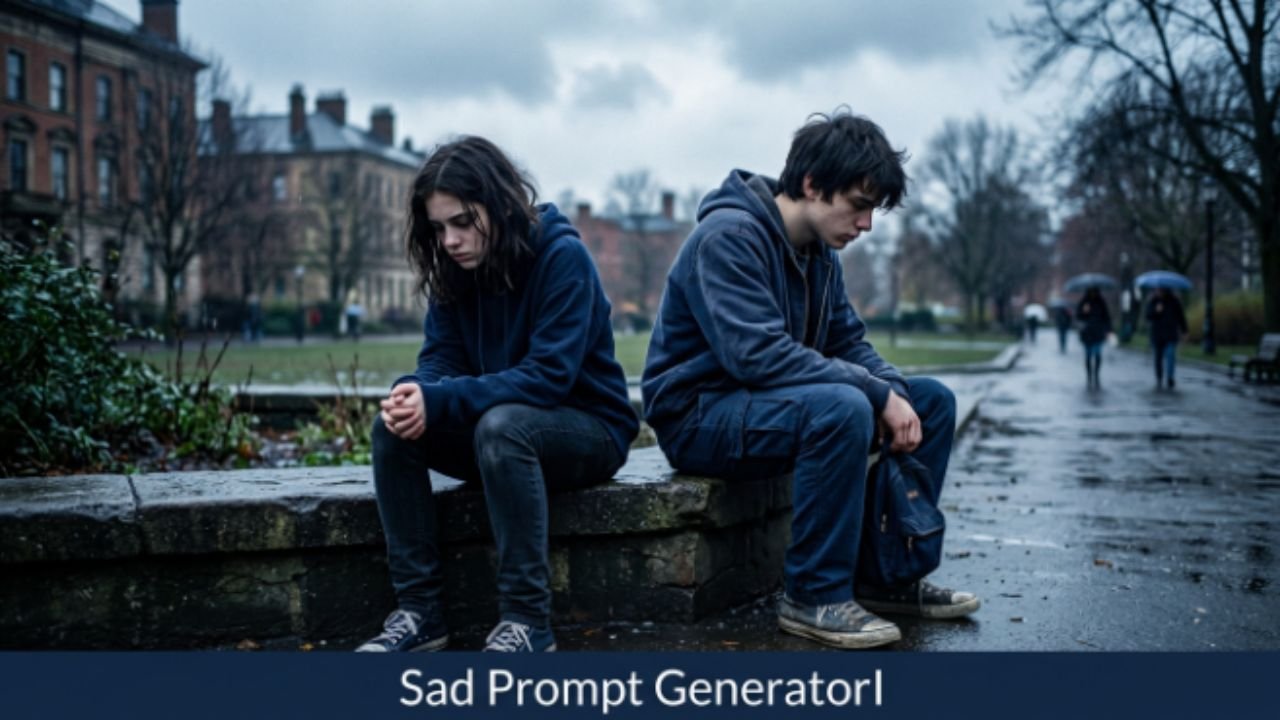
Have you ever felt something so heavy that no selfie could hold it? That quiet ache at 2 AM, the weight of standing alone in a city that keeps moving without you these emotions deserve more than a basic photo. A great sad prompt generator turns that invisible feeling into something people actually stop to look at. And when it is built around AI boy aesthetics, the result hits even harder.
This guide gives you everything you need to create stunning, emotionally resonant AI images from moody cinematic portraits to rain-soaked heartbreak scenes and misty cliff-edge solitude. Whether you want to express something personal or build an aesthetic feed that feels real, these prompts will take you there. Keep reading the one that matches exactly how you feel is already waiting.
Sad Prompt Generator
The right sad prompt generator does not just describe a picture. It carries an emotional instruction telling the AI how the light should fall, what weight the subject’s eyes should hold, and how empty the background should feel. Emotional AI photography works because it layers specific visual cues: cool color temperatures, soft directional shadows, isolated subjects, and atmospheric environments like fog, rain, or empty streets at night.
When you use a sad aesthetic prompt, every word matters. Words like “melancholic,” “cinematic,” “desaturated tones,” “single streetlamp,” and “tearful gaze” speak directly to how AI image generators process mood. The more precise your prompt language, the more the final image feels emotionally true rather than generically moody.
| Prompt Element | Effect on Output |
| “Desaturated blue tones” | Creates a cold, emotionally distant palette |
| “Single-source directional lighting” | Adds cinematic depth and facial shadow |
| “Rain-soaked environment” | Signals grief, isolation, emotional weight |
| “Contemplative downward gaze” | Communicates inner sadness without overacting |
| “Empty urban background” | Emphasizes loneliness and disconnection |
| “Soft motion blur” | Creates a dreamlike or memory-like quality |
For the best results with any sad AI photo prompt, use specific emotional descriptors rather than general ones. “Sad” alone gives the AI very little to work with. “Eyes heavy with unexpressed grief, jaw slightly clenched, gaze fixed somewhere beyond the frame” that is the kind of instruction a sad prompt generator needs to create something that actually moves people.
Here are five foundational prompts to start with:
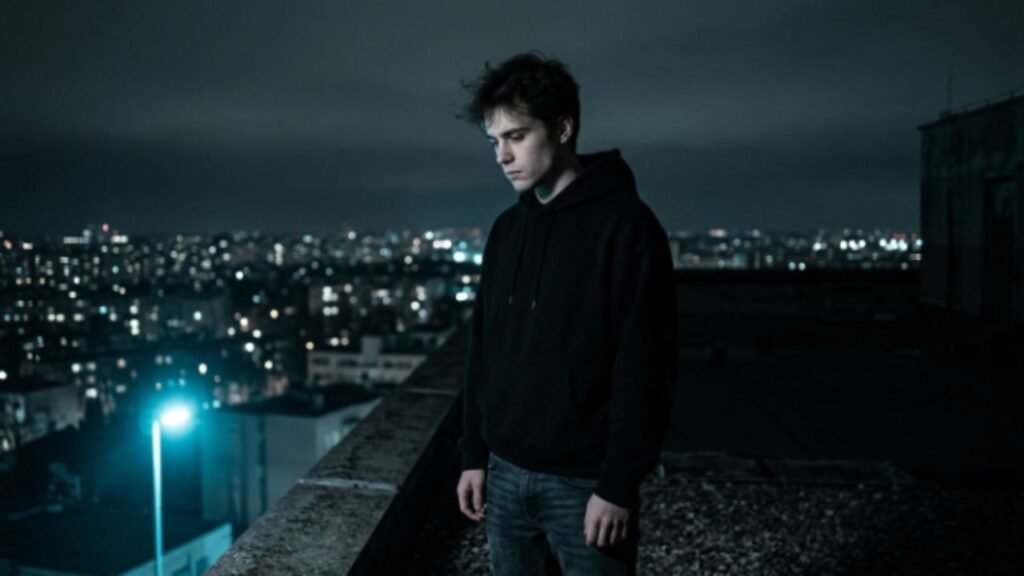
“Ultra-realistic 8K cinematic portrait of a young man standing alone at the edge of an empty rooftop at midnight. The city glitters far below him but he does not look at it. His eyes are downcast, jaw softly set, hair slightly tousled by wind. Lighting is a single cold blue streetlamp from the left, casting deep shadows across half his face. Outfit: oversized black hoodie, dark wash jeans. Background blurred and desaturated. Mood: quiet grief, isolation, emotional depth. No filters, no glow. Photorealistic.”
“Hyper-realistic cinematic still of a young man sitting on wet pavement under a broken umbrella in heavy rain. His expression is blank, eyes slightly red. Puddles reflect a fractured neon sign above him. Jacket is soaked through. One hand rests open on his knee as if he released something. Color palette: cold blues, washed greys, one bleeding neon red. Camera angle: low-angle, wide aperture, shallow depth of field. Mood: grief after loss, numbness. 16:9 aspect ratio.”
“Fine black-and-white portrait of a young man leaning his forehead against a cold window at night, one hand pressed flat against the glass. Outside is a blurred cityscape in rain. His breath fogs the window slightly. Expression: quietly devastated, distant. Dramatic side lighting from a single lamp to his left. Shot on 35mm film grain texture. Mood: longing, separation, silent heartbreak. Vertical format 9:16.”
“Cinematic portrait of a solitary young man standing in a foggy forest clearing just after dawn. He stares at his phone screen it shows no new messages. His face is lit only by the cold blue light of the screen. Background: tall dark pine trees dissolving into white fog. His breath is faintly visible. Outfit: grey knit sweater, dark trousers. Color palette: muted greens, deep shadows, cold blue highlight. Mood: waiting for someone who will not come.”
“Ultra-realistic emotional scene of a young man sitting inside a moving train, head resting against the window. Outside, the landscape blurs into grey and green. He watches his own reflection more than the scenery. One earbud in, eyes slightly glassy. Soft overcast natural light. No dramatic color grading this is quiet sadness, not theatrical. Mood: leaving something behind that still hurts.”
The Art of Sad Aesthetic Photography
Sad aesthetic photography is a visual language built on restraint. It is not about exaggerating pain it is about making the viewer feel a stillness that aches. The best moody portrait photography in this genre draws from noir cinematography, film photography grain, and the kind of raw emotional honesty you find in documentary portraits. The most powerful images in this style carry a whole story in a single frame.
The visual grammar is consistent across the best examples: cool or desaturated color palettes, single-source dramatic lighting, atmospheric environments such as rain, fog, or empty late-night streets, and a subject whose expression communicates weight without performing it. The dark aesthetic portrait tradition goes back to photographers like Francesca Woodman and Viviane Sassen artists who understood that negative space and shadow are as expressive as any face.
| Visual Element | Why It Works |
| Cool blue-grey color grading | Triggers subconscious associations with cold, distance, isolation |
| Deep side shadows on face | Creates mystery, internal conflict, emotional complexity |
| Rain or fog in environment | Universally recognized symbol of grief and emotional weight |
| Subject avoiding camera eye contact | Suggests interior emotional world the viewer cannot access |
| Empty or blurred backgrounds | Forces full emotional attention onto the subject |
Cinematic composition is what separates a sad aesthetic image from just a photo of someone looking down. Wide aperture shallow depth of field, low-angle shots that make the subject feel exposed, high-contrast backlighting that creates silhouettes these are the tools that transform a simple portrait into something that resonates emotionally. When you build these elements into your sad prompt generator inputs, the AI has the technical vocabulary it needs to create something genuinely striking.
AI Boy Prompt
The AI boy prompt genre has become one of the most searched and recreated aesthetics in AI image generation. It combines the emotional directness of sad aesthetic visuals with highly specific visual styling: messy dark hair, oversized hoodies or fitted black jackets, urban environments, and expressions that suggest depth without explanation. The appeal is universal people find in these images something they recognize from their own interior life.
What makes an AI boy aesthetic work is specificity layered on authenticity. The best prompts name exact clothing details, lighting angles, camera settings, and emotional cues rather than leaving the AI to guess. Hyperrealistic AI portraits in this style live or die on the quality of the prompt instruction vague inputs produce generic outputs, while detailed emotional and visual specifications produce images people screenshot and save.
| Prompt Style | Best Use Case |
| Cinematic Drama | Rain, neon, deep shadows, urban night scenes |
| Minimalist Melancholy | Neutral backgrounds, soft natural light, quiet expression |
| Environmental Atmosphere | Fog, forests, cliffs, misty dawn settings |
| Black and White Fine Art | High contrast, film grain, classical composition |
| Night Sky / Moonlight | Rooftop scenes, starlit fields, cold blue ambient light |
Here are five powerful AI boy prompts for your next generation:
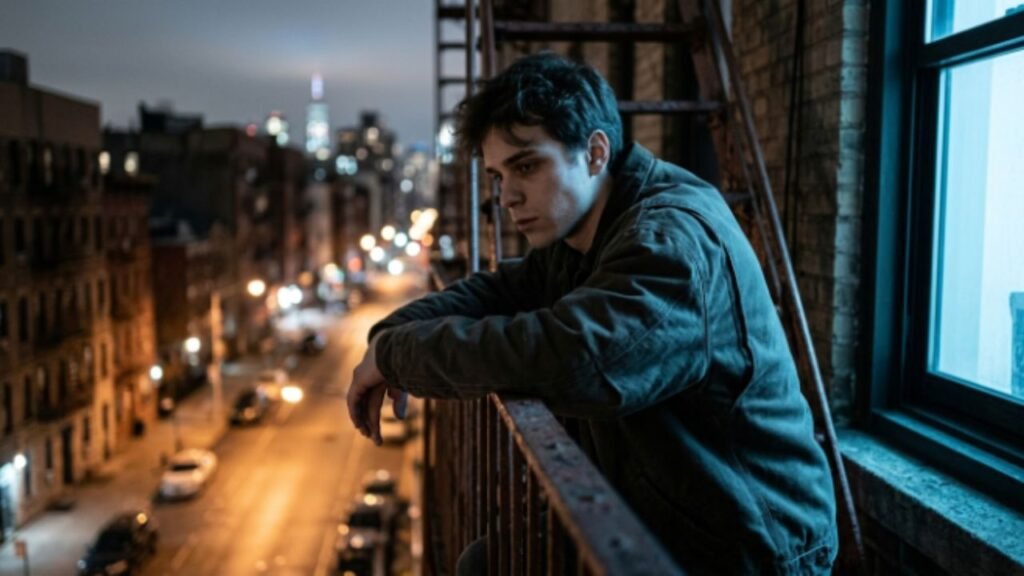
“Hyperrealistic 4K cinematic portrait of a young man with dark wavy hair sitting on a fire escape in New York at 3 AM. The city hums below him but he is completely alone with it. He leans his elbows on the metal railing and stares at nothing. His jacket is slightly too big. A cold light from a window behind him creates a rim light along his shoulders. Expression: quiet devastation, the kind after you have already cried everything out. Color palette: deep navy, amber street glow, cold grey metal. Mood: aftermath of heartbreak.”
“Ultra-realistic cinematic scene of a teenage boy walking alone through an empty rain-soaked street at midnight. He does not have an umbrella. His hoodie is soaked and his hands are shoved into the front pocket. He does not rush. He looks at the ground, watching his own reflection in each puddle. Each puddle shows a slightly different version of him. Color palette: cool greys, reflected neon orange, deep blue shadows. Mood: lost in thought, processing something too heavy to carry.”
“Fine art black-and-white portrait of a young man in his bedroom at night. He sits on the floor with his back against the bed frame, knees up, face turned away from camera. Soft lamplight from the desk catches only his profile and the curve of his shoulder. The rest is deep shadow. On the floor beside him: a phone screen face-down. Mood: the specific loneliness of choosing not to check it. Shot on medium format film, visible grain, soft focus edges.”
“Atmospheric emotional portrait of a boy standing on a hill at dusk, facing away from camera, looking out over a valley disappearing into fog. Wind moves his hair. He has both hands in the pockets of a light grey coat. The sky is a gradient from bruised purple to dark blue. His silhouette is the sharpest thing in the frame. Mood: standing at a threshold between something he is leaving and something he cannot yet see. No face visible the posture carries everything.”
“Cinematic rain scene portrait of a young man kneeling on wet pavement in front of a closed door. He has knocked. He is waiting. The door has a light on inside but no one comes. His expression is not angry just quietly accepting. Rain falls straight down. One hand still rests against the door. Outfit: dark grey button-up shirt, black trousers, no jacket. Color palette: deep charcoal, cold blue, single warm rectangle of light from the door. Mood: the grief of being on the wrong side of something.”
Creating Your Sad Aesthetic Portrait with Gemini
Gemini’s image editing capabilities make it one of the most accessible tools for creating emotional portrait AI art that responds to a real uploaded photo. When you use your own selfie as source material, Gemini preserves your facial structure and expression while transforming the surrounding environment, lighting, color palette, and atmosphere according to your sad prompt generator instructions. The result is a portrait that feels both personal and cinematic.
The workflow is straightforward, but each step significantly affects the quality of the final output. Your choices in source photo selection, mood direction, and prompt language combine to determine whether the result feels genuinely emotional or merely aesthetic.
Source Photo Selection for Moody Portraits
The expression in your source photo is the single most important factor in sad aesthetic portrait generation. An authentic, slightly heavy expression a neutral downward gaze, tired eyes, a quietly set jaw gives Gemini emotional raw material that it can amplify through lighting and color. Cinematic portrait AI works by building on what is already present in the source image, not by inventing an emotion that was never there.
Avoid photos with bright even lighting, forced smiles, or busy backgrounds. Natural directional lighting that already creates some shadow on your face will give the AI the depth cues it needs to create genuine moody portrait photography. Side-lit photos, window light photos, and slightly underexposed images tend to produce the best results in the sad boy aesthetic genre.
Opening Gemini
Visit gemini.google.com or open the Gemini mobile app. Sign into your Google account the free tier provides access to image editing capabilities. Use the attachment icon to upload your source photo before entering your prompt. Make sure your photo is high-resolution and well-lit even if the expression is quiet the AI needs facial detail to preserve your hyperrealistic face accuracy in the output.
Choosing Between Cinematic, Minimal, or Environmental Moods
The sad aesthetic photography genre contains several distinct sub-aesthetics, and choosing between them before you write your prompt produces significantly better results. Cinematic dramatic prompts lean into rain, neon lighting, deep urban shadows, and high-contrast color grading they feel like stills from a film. Minimalist melancholy prompts use neutral or empty backgrounds with soft natural light they feel quieter, more internal. Environmental atmospheric prompts place the subject in fog, forests, cliffs, or open night skies they feel expansive and solitary.
Know which emotional register you are trying to reach before you write. Each sub-aesthetic requires different prompt language for AI image generation and produces a fundamentally different emotional experience in the viewer.
Refining the Emotional Atmosphere
After your first generation, use targeted refinement prompts rather than restarting entirely. Specific adjustment prompts for sad aesthetic photos include: “make the color tones cooler and more desaturated,” “deepen the shadow on the left side of the face,” “add more atmospheric fog behind the subject,” “make the background emptier and more isolated,” and “increase the visible grain texture to give a film photography feel.” Each of these adjustments targets a specific element of cinematic emotional photography and allows you to dial in the exact atmosphere you need.
20+ Best Gemini Prompts for Sad Boy
This collection represents the most effective and emotionally precise sad prompt generator inputs for Gemini tested for both AI boy aesthetic consistency and emotional impact. Every prompt is designed to produce a hyperrealistic cinematic portrait with genuine emotional weight. Use them with your uploaded selfie for personalized results or run them as standalone art generations.
When you write or adapt these prompts, remember that emotional AI portrait generation responds most strongly to layered specificity: exact clothing, precise lighting sources, named color palettes, and genuine emotional descriptors rather than generic mood words.
| Prompt Category | Emotional Tone | Key Visual Elements |
| Rain Scene | Grief, numbness | Wet pavement, neon reflections, soaked clothing |
| Rooftop Night | Loneliness, longing | City lights below, cold blue sky, wind |
| Forest/Nature | Isolation, searching | Fog, pine trees, dawn light |
| Black & White | Introspection | Film grain, deep shadows, single lamp |
| Train/Journey | Loss, moving on | Blurred landscape, window reflection |
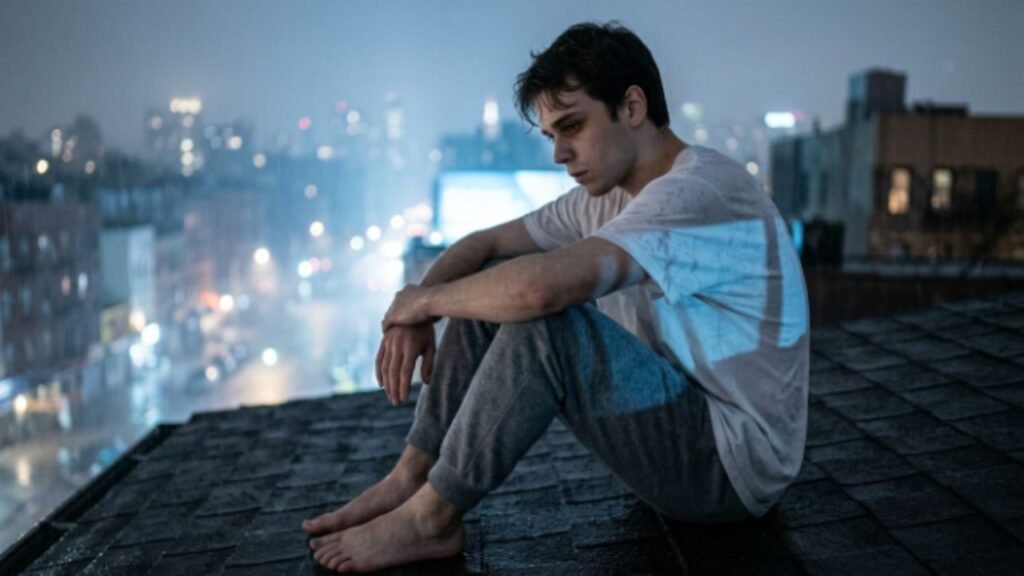
“Ultra-realistic 8K cinematic portrait of a young man with slightly tousled dark hair sitting cross-legged on wet rooftop tiles at 1 AM. The city spreads below him, blurred into warm bokeh points of light. He leans forward, elbows on knees, hands loosely clasped. His eyes are directed down and slightly to the right not at anything in the world, but at something in his mind. Outfit: oversized white t-shirt darkened by light rain, grey jogger pants, no shoes. One cold blue LED strip from a rooftop billboard throws a geometric shadow across his torso. The rest of the scene is deep natural shadow. Color palette: cool blue-silver ambient, warm distant bokeh, deep charcoal foreground. Mood: the quietness after a long cry. No dramatic expression. Just the specific stillness of someone who has felt too much and gone quiet. Camera: low-angle, 35mm, shallow depth of field, photorealistic. Background: soft bokeh city lights, slightly misty air. Face: 100% matching to uploaded reference. Keep facial features completely unchanged.”
“Hyper-realistic cinematic scene of a boy sitting inside an empty late-night laundromat, watching his clothes spin in the machine. The fluorescent light above him flickers slightly. He is not watching the machine he is looking at the empty plastic chair next to him, where someone used to sit. His expression is unreadable but the posture says everything: shoulders slightly rounded, hands folded in his lap, feet flat on the floor. Color palette: yellowed fluorescent light, deep blue shadow in corners, white machine glass. Mood: the mundane sadness of doing ordinary things after someone leaves. Shot on film, slight overexposure on the fluorescent wash, deep shadow detail preserved.”
“Fine art cinematic portrait of a young man standing at a bus stop alone at 4 AM. No bus is coming. He knows this. He is simply standing in the only lit circle in an otherwise dark street. Rain falls outside the shelter but not on him he is in the dry centre, watching it fall. His hands are in his jacket pockets. His expression: patient in the way that has given up expecting anything. Color palette: one sodium-yellow streetlamp overhead, deep grey-blue darkness beyond, rain silver in the lamplight. Mood: waiting out a feeling rather than a bus. Lens: 50mm prime, f/1.4, bokeh rain in background, sharp face.”
“A detailed one: Ultra-realistic 4K cinematic emotional portrait of a 22-year-old man (use attached photo for 100% facial accuracy) sitting on the floor of his apartment at night with his back against the wall beneath a window. The window shows a wet city street below. His phone screen is face-down beside his right knee. He has not picked it up in forty minutes. The room around him is mostly dark only the ambient light from the street and a barely-glowing laptop screen ten feet away provide any illumination. His left arm rests on his bent knee. His right hand is flat on the wooden floor. He is looking at the middle distance, seeing nothing in particular. His jaw is relaxed. His eyes are slightly glassy not from current crying, but from earlier. His hair is a little messy not stylishly, just actually. Outfit: grey cotton t-shirt, black track pants, white socks. No shoes. The lighting is: primary source from the wet window casting a wavering blue-white light across his left shoulder and the left side of his face. Secondary source from the distant laptop creating a barely perceptible warm glow at the edges of the right side of his silhouette. Shadows: the right side of his face is in deep shadow. The floor around him is dark with isolated pools of reflected window light. Color palette: cold blue-white from window, deep charcoal blacks, warm amber from distant laptop, pale grey in his t-shirt. Camera angle: eye level, slightly wide, capturing him and the floor around him and the dark room behind him. Lens: 28mm, wide aperture, sharp on his face, soft in the background and the dark floor areas beyond him. Mood and atmosphere: the specific emotional state of a person who is not dramatically breaking down but simply sitting with something too heavy to put down. This is not a performance of sadness. It is the actual thing. Post-processing: natural grain consistent with 3200 ISO film photography. No color filters. No vignette. No glow. Photorealistic cinematic grading only. Aspect ratio: 9:16 vertical.”
“Minimalist emotional portrait of a young man lying on his back on a rain-wet football field at night, staring straight up at the sky. The stadium lights are off. One distant lamp across the road makes his wet jacket glint faintly. He is not broken dramatically he is simply flat on the ground looking at nothing but sky, arms slightly out from his body. The grass is wet and cold against the back of his head. His eyes are open. Expression: exhausted acceptance. Color palette: deep black sky, single silver ambient light, wet grass dark green going black. Mood: the freedom of finally stopping.”
What Makes a Sad Prompt Generator Work for AI Boy Images?
A sad prompt generator works for AI boy aesthetic images because it combines emotional intelligence with precise technical language. Most people type “sad boy” into a generator and get a generic result. The ones who type “cinematic 8K portrait, desaturated blue tones, single cold streetlamp, rain-soaked oversized hoodie, quiet devastation not dramatic tears, low angle 35mm lens, photorealistic” those people get images that stop people mid-scroll.
The secret is understanding that AI image models respond to layered specificity across five dimensions: emotional state, visual environment, lighting setup, color palette, and technical camera details. When all five align, the output reaches a level of cinematic emotional realism that generic prompts never achieve. The sad aesthetic AI photography community has developed a vocabulary of effective descriptors through thousands of generations and the prompts in this guide draw directly from that collective knowledge.
“Hyperrealistic cinematic portrait of a boy who has just received bad news, sitting in a hospital corridor. The chairs are the orange plastic kind. The corridor is long and empty. He sits with his elbows on his knees and his face in his hands. Not crying. Just processing. The fluorescent light above him hums. His jacket is still on he has not settled into being here yet. Color palette: harsh institutional white-green fluorescent, deep shadow under chairs, muted navy of his jacket. Mood: the suspension between learning something and feeling it fully.”
“Atmospheric portrait of a young man standing alone on a beach in winter, facing the ocean. The sky is the same grey as the water. He cannot tell where one ends and the other begins. He is wearing a coat that is not quite warm enough and his hands are shoved deep into the pockets. He is not watching the waves. He is looking at the horizon line, or just beyond it, at nothing the camera can see. Mood: the kind of lonely that the ocean makes bigger, not smaller. Color palette: silver grey sky and sea, dark sand, muted navy coat, no bright color anywhere in frame.”
Colour & Tone Guide for Sad Boy Aesthetic
Color is the most immediately emotional element in sad aesthetic photography. Before you write any sad prompt generator input, knowing your target color palette dramatically improves the consistency and emotional accuracy of your output. The moody portrait AI community has developed specific color language that AI image generators respond to with high precision.
The foundational palette of sad boy aesthetic AI art builds on cool temperature biases: desaturated blues and greys dominate, with occasional warm accent sources (a single streetlamp, a neon sign, a phone screen) that create emotional contrast rather than warmth. The warmth in these images is always isolated and slightly unreachable it emphasizes the cold rather than counteracting it.
| Color/Tone | Hex Reference | Emotional Association | Best Used In |
| Midnight Blue | #0D1B2A | Deep loneliness, night, depth | Night sky, shadows, dark clothing |
| Slate Grey | #6B7280 | Numbness, fog, emotional flatness | Backgrounds, overcast skies |
| Muted Teal | #2D6A6A | Cold water, distance, disconnection | Rain scenes, reflections |
| Desaturated Ivory | #E8E4DD | Emptiness, lost color, absence | Skin tone grading, minimal scenes |
| Sodium Yellow | #FFB347 | Isolated warmth, single source light | Streetlamps, laundromat light |
| Film Grain Silver | #C0C0C0 | Memory, distance, black-and-white feel | Fine art portrait grading |
| Washed Black | #1A1A2E | Heaviness, night scenes, weight | Hoodies, jackets, deep backgrounds |
For cinematic color grading in sad aesthetic prompts, use phrases like: “color grade similar to a desaturated Kodak film stock,” “color palette of a winter evening with one warm artificial light source,” “crushed blacks with lifted shadow detail, cool shadow tint, slightly washed highlights,” and “reminiscent of 1990s analog photography slightly underexposed, natural grain, no digital clarity.” These technical color descriptors give AI image generators the precise grading instructions they need to deliver emotionally resonant visual outputs consistently.
Here are five color-specific sad prompt generator inputs:
“Cinematic portrait with full desaturated color grading: all warm tones pulled out of the image except for one source a single amber streetlamp in the upper left background. The subject, a young man in a dark navy jacket, stands facing away from that light. His back and the left edge of his shoulder catch a rim of amber. The rest of his body and face are lit by cold ambient blue from an overcast sky above. The ground is wet. The amber reflects in the puddle in front of him. Color palette: cold blue dominant, single amber accent, deep charcoal background. The amber makes the cold feel colder.”
“Black and white fine art portrait with strong split lighting: one hard light source directly to the subject’s right, the rest of the frame in deep natural shadow. Subject is a young man, early 20s, sitting in a wooden chair facing slightly away from the light. His near eye catches the light. His far eye disappears into shadow. Film grain visible. No digital clarity added. Shot on Leica M, 50mm Summicron. Mood: classical melancholy, the weight of a single thought.”
Which Sad Prompt Generator Gives the Most Cinematic AI Boy Results?
The sad prompt generator approach that consistently delivers the most cinematic AI boy results is one that treats the prompt as a film director’s shot description rather than a simple image request. Film directors do not say “make it sad.” They say “wide shot, low angle, subject isolated in frame, single practical light source from upper left, color temperature 4500K, slightly underexposed, grain.” That level of technical prompt precision is exactly what separates good AI image outputs from exceptional ones.
For Gemini specifically, the platform responds well to layered descriptions that move from the largest element to the smallest: start with overall scene and environment, then move to subject and clothing, then lighting sources and directions, then color palette and grading, then mood and emotional tone, then technical camera specifications. This structured approach gives Gemini’s model the complete context it needs to make coherent decisions about every visual element simultaneously.
“Cinematic wide shot of a young man walking alone through an empty city underpass at 3 AM. The underpass is lit by evenly spaced fluorescent tubes, every other one flickering. His footsteps echo. He is carrying nothing, going nowhere urgent. His shadow repeats and multiplies along the walls as he passes each light. He does not look back. Outfit: dark grey cargo pants, black t-shirt, worn white sneakers. Camera: tracking from behind at medium distance, slightly low angle. Color palette: green-tinged fluorescent white, deep graphite shadows, slight motion blur on the background. Mood: the emptiness of moving through a world that does not notice you.”
“Intimate close-up cinematic portrait of a young man’s face, lit only by the light from his phone screen held just below frame. The screen casts a cold blue-white light upward across his face. He is reading something. His expression has just changed from neutral to the very first moment of something painful, before the face has decided how to respond. Eyes slightly wider. Jaw barely shifted. The moment before the feeling lands fully. Color palette: cold blue-white phone glow, deep black surroundings. Camera: 85mm portrait lens, f/1.8, everything except his face completely dark and out of focus. Mood: the exact second of receiving bad news.”
What Are the Best Sad AI Prompts for Beginners?
The best sad prompt generator starting point for beginners is the environment-first approach: describe the setting in specific emotional detail before introducing the subject. This gives the AI a strong atmospheric foundation that it then populates with the human figure, producing more coherent emotional results than subject-first prompts do.
For AI boy aesthetic beginners, start with three-part prompts: one sentence for setting, one sentence for subject and expression, one sentence for color palette and mood. As your prompt skills develop, you can expand each section but even a simple three-part structure produces significantly better results than a one-word mood instruction.
“Dark and rainy city street at night, reflecting neon signs in puddles. A young man in a black hoodie stands still while everyone around him moves as blurred light streaks. His face is turned slightly away. Color palette: cool blue shadows, bleeding neon red and green reflections, deep urban darkness. Mood: stillness inside chaos, the loneliness of crowds.”
“Empty beach at grey winter dawn. A teenage boy sits in the dry sand just above the tide line, knees pulled to his chest, watching the flat grey sea. Nobody else is here. His jacket is unzipped and moving in the wind. Expression: not unhappy, just very far away inside himself. Color palette: silver-grey sea and sky, pale sand, muted blue jacket. Mood: peaceful sadness, early morning solitude.”
“A young man’s reflection in a rain-covered window at night. He sits inside, looking out. The outside world street, cars, walking people is blurred and rain-streaked. His face is the sharpest element. Expression: watching the world move without him. Color palette: warm interior amber behind him, cold blue rain world beyond the glass. Mood: the particular sadness of being inside when you do not want to be inside.”
FAQs
What is a sad prompt generator for AI images?
A sad prompt generator is a structured prompt tool that combines emotional descriptors, visual cues, and technical camera language to produce moody cinematic AI portraits. It gives AI models precise instructions for atmosphere, lighting, color, and expression.
How do I make an AI boy look genuinely sad, not just serious?
Use specific emotional language in your sad prompt generator input describe the internal state, not just the expression. Words like “quietly devastated,” “aftermath of grief,” and “too tired to cry” produce more authentic AI boy aesthetic results than the word “sad” alone.
Can I use my own photo with sad prompt generator prompts?
Yes. Upload your selfie into Gemini and add “use uploaded reference photo, keep facial features 100% unchanged” to any sad prompt generator prompt. The platform preserves your face while transforming the lighting, environment, and color palette.
What colors work best for sad aesthetic AI images?
The most effective sad aesthetic photography palettes use cool desaturated blues and greys as the dominant tone, with a single isolated warm light source (streetlamp, phone screen, neon sign) for emotional contrast. This creates depth and visual tension.
Which Gemini settings produce the best sad boy aesthetic?
No special settings are needed Gemini’s standard image editing mode responds well to detailed sad prompt generator inputs. The quality of the output depends almost entirely on the precision and emotional specificity of the prompt you provide.
How long should a sad AI image prompt be?
The most effective sad prompt generator inputs run between 80 and 200 words, covering environment, subject, lighting, color palette, emotional tone, and camera details. Shorter prompts produce more generic results; longer prompts with specific details produce more emotionally accurate and cinematic outputs.
What is the difference between sad aesthetic and dark aesthetic in AI prompts?
Sad aesthetic photography focuses on emotional weight, solitude, and melancholy it is personal and introspective. Dark aesthetic leans toward gothic, horror, or edgy visual styles. In AI boy aesthetic prompts, sad aesthetic uses desaturated real-world environments and authentic expressions, while dark aesthetic uses dramatic stylized visuals and exaggerated contrast.
Conclusion
A good sad prompt generator is more than a tool it is a language for the feelings that ordinary photos cannot carry. Every prompt in this guide is designed to help you produce AI boy aesthetic images that hold real emotional weight, from rain-soaked heartbreak scenes to quiet rooftop solitude under a cold city sky. The difference between a forgettable AI portrait and one that genuinely moves people always comes down to the specificity and emotional honesty of the sad prompt generator input.
Use these prompts as starting points, not endpoints. The best emotional AI photography comes from prompts that carry something real a feeling you actually know, a moment you recognize, a weight that is genuinely yours. That authenticity, built into the instruction, is what the AI amplifies into something people cannot scroll past. Start with the prompt that fits how you feel right now.

Alex Carter is a technology writer covering AI, software, cybersecurity, and digital trends, delivering expert insights and practical guides.