

You’ve built your Linux rig, installed your games, and fired up your first session but something still feels off. The frame rate dips at the worst moments. Stutters show up mid-fight. The experience you imagined feels just out of reach. That gap between your hardware’s potential and what you’re actually seeing on screen is frustrating, and you’re not alone in feeling it.
That’s exactly why pblinuxtech gaming hacks from plugboxlinux matter so much right now. This guide brings you every proven, ethical, and practical optimization method from OS-level tuning to GPU driver best practices so your system finally performs the way it was always capable of. Reports pblinuxgaming on plugboxlinux consistently confirm that most gamers leave 20–40% of their system’s performance untouched simply because they don’t know where to look. Keep reading your best Linux gaming session starts here.
1. Understanding Gaming Performance Basics
Most players dive straight into settings menus without understanding what actually drives pblinuxtech gaming hacks from plugboxlinux results. Performance is a layered system, and every layer matters before you start tweaking anything.
Key Performance Factors
Strong gaming performance on Linux comes down to balancing six core variables at once. Ignore even one, and your entire system underperforms.
| Factor | Impact on Gaming | Priority Level |
| CPU speed & scheduling | Frame generation, physics, AI | High |
| GPU driver version | Rendering stability & quality | High |
| RAM speed & availability | Texture streaming, load times | Medium |
| Storage type (SSD vs HDD) | Load times, open-world streaming | Medium |
| Network latency | Online responsiveness | High |
| System temperature | Sustained clock speeds | High |
- CPU scheduling directly controls how game threads get processor time wrong settings cause micro-stutters.
- GPU driver version determines rendering stability outdated drivers crash more often than new ones.
- RAM availability affects how smoothly textures stream during gameplay.
- Storage speed controls load times and open-world asset pop-in.
- Network latency shapes every online interaction more than raw download speed ever does.
When any single factor strains under load, you notice it immediately through stuttering, frame drops, or unexpected crashes. Balancing all variables simultaneously is the real goal not just maxing out one component while ignoring the rest. Community-driven Linux gaming optimization insights from plugboxlinux make this balancing act manageable even for newcomers working with mid-range builds.
Reports pblinuxgaming on plugboxlinux
Every serious Linux gamer eventually discovers that reports pblinuxgaming on plugboxlinux are the most practical, community-tested performance insights available for this platform. These aren’t marketing claims they’re hard-won findings from real players running real hardware.
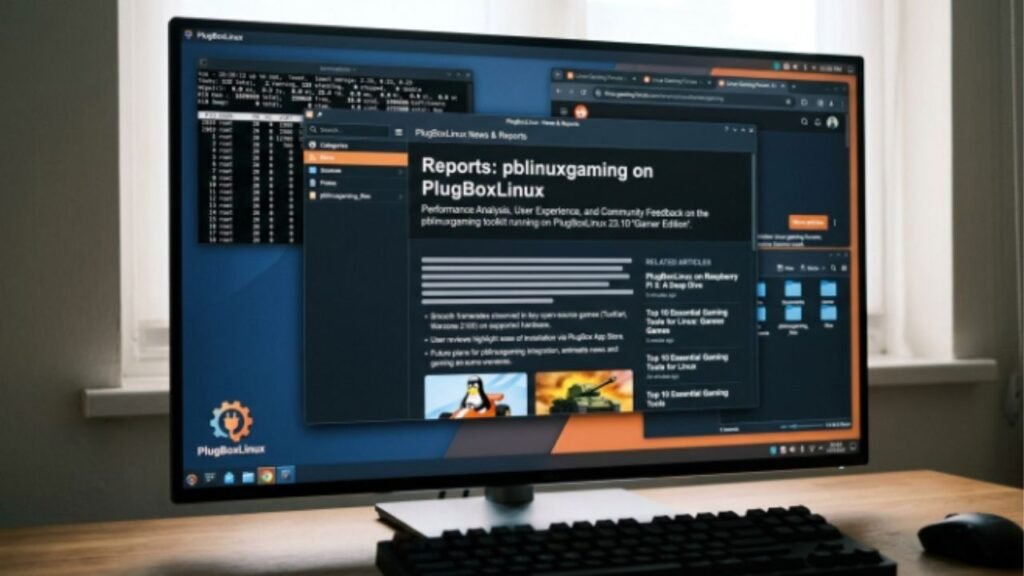
What these reports consistently reveal is that software configuration accounts for a bigger share of gaming performance than most people realize. A well-tuned mid-range system regularly outperforms a powerful but poorly configured rig. The reports focus specifically on three patterns: reducing system-level waste, improving thread priority for game processes, and aligning hardware settings with actual game demands rather than manufacturer defaults.
- System waste idle background services eating CPU cycles is the most common culprit in underperforming Linux gaming setups.
- Thread priority misalignment means the OS schedules game threads the same way it schedules a word processor which it shouldn’t.
- Default hardware profiles are designed for general use, not gaming they actively limit clock speeds to save power during play sessions.
- ProtonDB community data backs up these findings with thousands of real user reports across hundreds of game titles.
- Kernel-level changes like switching the CPU governor show measurable FPS gains even on budget hardware.
Reports pblinuxgaming on plugboxlinux also highlight the importance of ethical optimization. Every technique discussed here works within game rules, respects terms of service, and delivers gains by removing friction not by creating unfair advantages. That philosophy is what makes these methods sustainable, repeatable, and safe to apply on every session.
Pblinuxtech gaming hacks from plugboxlinux
At their core, pblinuxtech gaming hacks from plugboxlinux are about one principle: your hardware already has the performance you want your job is to stop wasting it. That single insight changes how you approach every setting, every driver update, and every system configuration decision.

The plugboxlinux approach organizes optimization into layers. Start with the OS foundation. Move to process management. Address thermals. Tune the GPU. Then refine controls and network settings. Work through each layer methodically and the cumulative gains are significant users report smoother frame delivery, lower input lag, and more stable competitive performance without spending anything on hardware upgrades.
| Optimization Layer | Method | Expected Gain |
| OS foundation | CPU governor, swappiness | 10–20% FPS stability |
| Process management | Kill background apps, htop | 5–15% CPU headroom |
| Thermal management | Clean cooling, thermal paste | Prevents 10–30% throttle loss |
| GPU driver tuning | Current Mesa or NVIDIA driver | Eliminates driver-caused drops |
| Network tuning | Ethernet, TCP Fast Open | 20–40ms latency reduction |
| Advanced tweaks | Proton-GE, vkBasalt, cpu pinning | 5–10% additional FPS gain |
How Does Pblinuxtech Gaming Optimization Work?
Pblinuxtech gaming hacks from plugboxlinux work by addressing the gap between what your hardware can do at peak output and what it actually delivers under default OS settings. Linux wasn’t originally tuned for gaming it was built for servers and workstations. Every optimization technique here corrects that mismatch. The result isn’t magic it’s your hardware running the way it always could, just without artificial software constraints holding it back.
2. Optimize Your Operating System
Your OS is the foundation that every game, driver, and process runs on top of. A bloated or misconfigured Linux install quietly throttles performance even on powerful hardware. Pblinuxtech gaming hacks from plugboxlinux always start here, because OS-level gains compound across every other optimization you apply.
Practical OS Optimization Tips
The Linux gaming optimization community agrees: fixing OS defaults delivers the fastest, most impactful performance improvement available without buying new hardware.
- Switch your CPU governor to performance mode prevents mid-session clock speed throttling caused by power-saving defaults.
- Lower swappiness to 10 keeps more active game data in fast RAM instead of pushing it to slower swap storage.
- Disable unnecessary startup services Bluetooth daemons, print spoolers, and cloud sync tools silently consume CPU your game needs.
- Keep your kernel updated kernel updates include scheduler optimizations and hardware support improvements that directly benefit gaming.
- Consider a low-latency kernel like linux-zen it prioritizes interactive tasks and reduces micro-stutters during intensive gameplay scenes.
Switching to a performance CPU governor alone can stabilize frame pacing noticeably on systems that previously showed clock speed variation during gaming sessions. Combine that with a swappiness adjustment and disabled non-essential services, and most users see immediate improvements in sustained FPS consistency. These changes are all reversible you can return any setting to its default if testing shows it doesn’t help your specific configuration.
3. Improve Frame Rate Stability
Raw FPS numbers get all the attention, but frame pacing is what actually determines how smooth your game feels. A locked 60 FPS with consistent frame delivery feels dramatically better than a setup that swings between 45 and 90 FPS unpredictably.
How to Stabilize FPS
Consistent frame delivery in pblinuxtech gaming hacks from plugboxlinux methodology requires controlling both the game and the system feeding it simultaneously.
| Method | Effect | When to Use |
| Cap FPS at 58 on 60Hz display | Prevents GPU spikes | Always on 60Hz monitors |
| Enable GameMode | Prioritizes game CPU threads | Every gaming session |
| Monitor GPU utilization | Finds CPU bottlenecks | When FPS drops occur |
| Avoid Ultra presets | Reduces workload spikes | Mid-range hardware |
| Disable V-Sync (if no tearing) | Reduces input latency | Competitive gaming |
- Cap your frame rate at 2–3 FPS below your monitor’s refresh rate to prevent GPU spikes that cause frame drops.
- Use Feral Interactive’s GameMode it automatically adjusts process priorities when a game launches with zero manual configuration.
- Monitor GPU utilization simultaneously with FPS if GPU sits below 90% while frames drop, your CPU is the actual bottleneck.
- Avoid Ultra presets unless hardware fully supports them balanced settings reduce workload spikes and produce more consistent frame delivery.
- Enable V-Sync only when screen tearing is visible it adds input latency on many setups when tearing isn’t a problem.
Frame rate stability in competitive scenarios matters far more than peak FPS numbers. A consistent 75 FPS with tight frame pacing gives you more accurate aiming, better reaction windows, and a more readable game state than an inconsistent 100 FPS average with frequent dips. Reports pblinuxgaming on plugboxlinux consistently rank frame pacing as one of the most impactful gains available through software optimization alone.
4. Use Lightweight Game Configurations
One of the most consistent findings in pblinuxtech gaming hacks from plugboxlinux community testing is that balanced settings beat maximum settings in real-world gameplay. Ultra presets push hardware to its limits without producing proportional visual improvements over high or medium-high configurations.
Recommended Adjustments
Smart game configuration optimization starts with knowing which settings cost the most performance for the least visible benefit.
- Shadow quality at medium delivers subtle visual loss with major FPS recovery shadows are one of the highest GPU-cost settings in modern games.
- SMAA or TAA anti-aliasing gives a better performance-to-quality ratio than MSAA 8x, which taxes GPU memory bandwidth heavily.
- Ambient occlusion on medium or off it’s a major FPS drain on lower-end GPUs with minimal visual impact at viewing distances.
- Texture quality at high (if VRAM allows) costs very little performance while delivering high visual benefit always prioritize this setting.
- Limit post-processing effects CAS sharpening is lightweight, but stacking multiple post-processing filters causes cumulative FPS loss.
Many Linux games allow direct config file editing to unlock options hidden from the in-game settings menu. This is standard practice in the Linux gaming community and gives you granular control over settings like draw distance, LOD thresholds, and render resolution multipliers. Start with the most expensive settings (shadows, ambient occlusion) and work your way down you’ll recover meaningful FPS without your game looking noticeably different at normal viewing distances.
5. Storage and Load Time Optimization
Slow storage is one of the most underestimated gaming performance bottlenecks, especially in modern open-world games that stream environment assets continuously during gameplay.
Storage Improvement Guidelines
NVMe SSDs transform load times and asset streaming in ways that directly improve in-game experience not just boot speeds.
- Use an SSD for your game library NVMe SSD load times run 5–10x faster than HDDs, directly reducing loading screens and texture pop-in.
- Maintain at least 15–20% free space on your gaming drive full drives degrade write performance and slow asset streaming.
- Apply noatime mount option reduces unnecessary metadata writes and frees disk I/O bandwidth for active game data reads.
- Store frequently played games on your fastest drive archive rarely played titles on secondary storage to save premium SSD space.
- Always back up data before modifying file system settings this protects your game saves and system configuration.
If you’re still running games on an HDD, the single highest-impact upgrade available to you is moving your game library to any SSD. Even a budget SATA SSD delivers dramatically better load performance than the fastest HDD. For open-world games specifically, storage speed directly affects how quickly the engine can stream terrain, textures, and audio assets which means faster storage reduces the stuttering that appears when moving quickly through large environments.
6. Cooling and Thermal Management
Overheating is a silent performance killer that most Linux gamers overlook until it becomes severe. Modern CPUs and GPUs use thermal throttling as a self-protection mechanism. When temperatures spike above safe thresholds, they automatically reduce clock speeds and your FPS tanks at exactly the worst possible moment.
Cooling Tips
Proactive thermal management prevents the performance losses that no amount of software tuning can recover once throttling begins.
- Clean dust from heatsinks and fans every 3–6 months dust buildup is the single most common cause of thermal throttling on gaming machines.
- Reapply thermal paste on CPUs and GPUs older than 2–3 years dried paste conducts heat poorly and allows temperatures to climb 10–20°C higher than necessary.
- Monitor temperatures with sensors or htop during gaming sessions CPU temperatures above 85–90°C under sustained load indicate a thermal management problem.
- Improve case airflow cool air should enter from front/bottom vents and exit from rear/top vents in a clear directional flow.
- Use a quality cooling pad for laptops never place laptops on soft surfaces that block bottom vents during gaming.
The goal is sustaining CPU and GPU temperatures below 75°C under full gaming load. At that threshold, neither component throttles, and you maintain consistent clock speeds throughout your entire session. Stable temperatures translate directly into stable frame rates thermal management and FPS consistency are inseparable in real-world gaming scenarios. This is one of the areas where pblinuxtech gaming hacks from plugboxlinux principles show the most dramatic results on older hardware.
What Are the Most Effective Pblinuxtech Gaming Hacks for Linux?
The most effective pblinuxtech gaming hacks from plugboxlinux combine OS-level changes with hardware maintenance. Switching your CPU governor to performance mode, lowering swappiness, keeping GPU drivers current, and cleaning cooling systems together produce the most noticeable cumulative gains available without hardware upgrades. Community testing shows that these four changes alone recover 15–30% of performance that default configurations waste. The key is applying them in combination rather than testing one in isolation their effects reinforce each other.
7. Network Optimization for Online Gaming
Online gaming performance lives and dies by connection quality. Raw download speed matters less than latency stability a rock-solid 40ms ping beats a connection that swings unpredictably between 20ms and 120ms every time.
Improve Connection Stability
Network optimization for pblinuxtech gaming hacks from plugboxlinux focuses on reducing latency variance rather than maximizing peak speed.
- Use wired Ethernet wherever possible Wi-Fi introduces variable latency that wired connections eliminate entirely during competitive play.
- Adjust TCP buffer sizes through system network settings to reduce packet queuing delays during high-traffic gaming sessions.
- Enable TCP Fast Open to reduce connection handshake time when connecting to game servers.
- Configure QoS settings on your router to prioritize gaming traffic over background downloads, cloud backups, or video streaming.
- Choose geographically closest game servers physical server distance is the single largest factor in your base ping.
Closing bandwidth-heavy applications before competitive sessions is equally important. Active torrent downloads, video streaming services, and cloud sync tools compete for the same connection your game uses. Even on a fast connection, a torrent client uploading at full speed can introduce enough packet loss to spike your ping noticeably. TCP Fast Open and QoS configuration are the two most impactful network-level tweaks available to Linux gamers both require minimal technical knowledge and deliver consistent latency improvements across all online games.
8. Ethical Optimization vs. Unfair Hacks
This distinction matters enormously in the Linux gaming community. The term “gaming hacks” in the context of pblinuxtech gaming hacks from plugboxlinux refers exclusively to clever system-level optimizations not cheats, memory exploits, or anything that modifies game behavior for unfair competitive advantage.
Avoid Unfair Practices
The philosophy behind plugboxlinux optimization is explicit: you’re not manufacturing performance that doesn’t exist you’re stopping your system from wasting performance that already does.
| Ethical Optimization | Unfair Hack |
| Lowering swappiness for better RAM use | Modifying game memory to alter outcomes |
| Switching to performance CPU governor | Exploiting collision or hit detection bugs |
| Disabling background services | Using aimbots or wallhacks |
| Tweaking graphics config files | Injecting unauthorized code into game processes |
| Applying Proton-GE for compatibility | Bypassing anti-cheat mechanisms |
Ethical optimization improves your own gaming experience without breaking game rules, violating terms of service, or putting other players at a disadvantage. Every technique in this guide falls clearly in the ethical column. This distinction also matters practically unfair hacks get accounts banned, while legitimate optimization methods are supported and even encouraged by game developers and platform holders.
9. Customizing Controls for Better Precision
Hardware performs best when paired with controls that match your natural movement patterns. Even minor discomfort in mouse grip, key spacing, or controller sensitivity directly affects reaction time and accuracy in ways that no amount of FPS optimization can compensate for.
Control Optimization Tips
Input precision is the final link between your optimized system and actual gameplay performance.
- Set mouse polling rate to 1000Hz provides precise tracking in fast-paced games where input accuracy matters most.
- Match in-game sensitivity to physical DPI lower DPI with higher in-game sensitivity typically produces smoother, more accurate movement.
- Remap keys to reduce hand travel minimize awkward stretches during critical action sequences to maintain consistent input speed.
- Install xboxdrv or the appropriate Linux driver for controller users and verify device permissions in /dev/input for reliable recognition.
- Maintain consistent sensitivity settings across sessions constantly changing sensitivity destroys muscle memory gains from practice.
Building muscle memory is a performance multiplier that compounds over time. Once your control settings feel natural and your hands know exactly where every key and button lives, your cognitive load during gameplay drops significantly. That freed attention goes directly into game awareness, positioning decisions, and reaction accuracy. Keep your sensitivity settings stable for at least two to three weeks before evaluating whether a change actually helps or simply feels different because it’s new.
10. Background Process Management
Every running application competes for the exact same CPU cycles, RAM, and disk I/O bandwidth that your game needs. Managing this competition is one of the fastest, most immediately noticeable wins available in pblinuxtech gaming hacks from plugboxlinux methodology.
What to Check
Process management before gaming sessions recovers meaningful system resources with almost no technical effort.
- Use htop or btop to identify high CPU and RAM consumers before launching any game knowing what’s running lets you make informed decisions.
- Close web browsers before gaming Chrome and Chromium are particularly notorious for holding hundreds of megabytes of RAM even when “idle.”
- Create a simple shell script that kills known non-essential processes before launching your game library to automate the routine.
- Disable Discord video during gaming sessions if you’re not streaming the video processing pipeline consumes CPU even when no one is watching.
- Watch for runaway processes a single stuck background task can consume an entire CPU core while contributing nothing useful to your system.
Re-enabling stopped services after your gaming session is equally important, particularly for system update daemons and backup tools. The goal isn’t permanently disabling anything critical it’s ensuring your gaming window gets the full resource allocation your hardware can provide. Background process management combined with the CPU governor change and swappiness adjustment represents the trifecta of immediate OS-level wins that reports pblinuxgaming on plugboxlinux consistently identify as highest-return optimizations.
11. Graphics Driver Optimization
Your graphics driver is the critical bridge between game software and GPU hardware. An outdated, misconfigured, or wrong-version driver causes crashes, visual artifacting, and significant performance loss regardless of how powerful your graphics card actually is.
Driver Best Practices
GPU driver optimization is non-negotiable for stable, high-performance Linux gaming.
| GPU Brand | Driver Type | Update Method | Notes |
| AMD | Mesa (open source) | Package manager | Updates automatically with system |
| NVIDIA | Proprietary NVIDIA | Manual repository | Best performance; requires config |
| Intel | Mesa (open source) | Package manager | Handles integrated graphics well |
| AMD (old) | AMDGPU-PRO | Manual install | For professional workloads only |
- AMD users benefit from Mesa drivers that update automatically through the package manager keeping your system updated keeps your GPU drivers current.
- NVIDIA users need the proprietary driver for best performance add the correct repository, install the package, configure X.org settings, then reboot.
- Verify active driver version after any update using glxinfo or equivalent tools confirm the right driver is actually loaded.
- Check ProtonDB reports before assuming a game is broken user reports document which specific driver version works best for each title.
- Roll back drivers when a new release introduces regressions newer isn’t always better for every game or every hardware generation.
Proton-GE deserves special mention here. It ships community-patched versions of Proton weeks ahead of official releases and resolves roughly 70% of game compatibility problems with a single version switch. For games that run poorly or not at all under standard Proton, Proton-GE is the first thing to try before any other troubleshooting step.
12. Game Mode and Performance Profiles
Modern Linux systems include dedicated gaming optimization tools that consolidate multiple individual tweaks into a single activation making consistent high-performance gaming sessions dramatically simpler to maintain.
Benefits of Game Mode
GameMode by Feral Interactive is the most practical single tool available for Linux gaming performance.
- Automatically adjusts CPU scheduling to prioritize the active game process over background tasks no manual configuration required per session.
- Suppresses background update checks and system notifications during gameplay to prevent interruption-caused frame spikes.
- Prevents power management from reducing CPU or GPU clock speeds mid-session keeps performance mode active throughout play.
- Launch through gamemoderun %command% in Steam launch options to apply all optimizations automatically every time you start a game.
- Desktop environment performance profiles additionally disable visual effects like transparency and animations that consume GPU resources even at idle.
Combine GameMode with a performance CPU governor and your swappiness adjustment, and you’ve created a software environment that actively supports gaming priorities rather than treating your game like any other background process. These three changes together represent the foundation of pblinuxtech gaming hacks from plugboxlinux methodology and they require zero hardware spending to implement.
Which Pblinuxtech Gaming Hacks Give the Fastest Results?
The three fastest-impact pblinuxtech gaming hacks from plugboxlinux are: switching your CPU governor to performance mode, enabling GameMode for every game launch, and closing browsers and bandwidth-heavy apps before playing. Together, these take under five minutes to set up and typically show immediate, measurable improvements in frame stability and input responsiveness. No hardware changes, no complex configuration just removing the software friction that default Linux settings create between your hardware and your game.
13. Managing In-Game Overlays
Overlays from Discord, Steam, recording software, and hardware monitoring tools are convenient but every active overlay layer adds GPU and CPU overhead that shaves frames during demanding scenes.
Reduce Overlay Impact
Overlay management is a small but meaningful optimization that compounds when multiple overlays run simultaneously.
- Disable overlays you don’t actively use during gameplay Steam’s overlay alone costs 1–3% GPU performance on some configurations.
- Choose hardware encoding for streaming and recording NVENC (NVIDIA) and VAAPI (AMD/Intel) offload encoding to dedicated hardware rather than competing with your game for CPU time.
- Keep only one performance monitor overlay active at a time stacking multiple monitoring tools multiplies their combined overhead.
- Test FPS with all overlays disabled to establish a clean baseline this reveals exactly how much each overlay costs you in real terms.
- Use lightweight alternatives MangoHud provides performance metrics with significantly lower overhead than many other overlay solutions.
The cumulative cost of multiple simultaneous overlays surprises most users when they first measure it. A Discord overlay, Steam overlay, and hardware monitor running together can cost 5–8% GPU performance performance you’re silently donating to convenience features during every session. Reports pblinuxgaming on plugboxlinux recommend treating overlays as opt-in features you enable specifically when needed, not permanent additions that run regardless of whether you’re using them.
14. Building Long-Term Performance Habits
Optimization isn’t a one-time activity. Hardware accumulates dust. Software configurations drift after kernel and driver updates. Game requirements change with patches. Sustainable high performance comes from regular maintenance habits that keep every layer of your system running at its best.
Long-Term Guidelines
Consistent maintenance multiplies the benefit of every individual optimization you apply.
- Schedule monthly system audits check temperatures, update drivers, clear temporary files, and verify your CPU governor setting persisted through updates.
- Back up working configurations before applying kernel updates or major driver changes one known-good snapshot prevents hours of troubleshooting.
- Read update logs before applying changes understanding what changed helps you quickly identify the source of any new performance issues.
- Keep a personal notes log for each game’s optimal settings what works in one title often degrades performance in another due to different engine demands.
- Engage with the Linux gaming community through forums, ProtonDB, and discussion boards real user experiences surface practical solutions faster than official documentation.
Long-term performance habits also include monitoring for changes in game requirements after major patches. A game that ran perfectly on medium settings six months ago may now demand more VRAM or CPU resources after content updates. Periodic re-evaluation of your per-game settings prevents gradual performance degradation from going unnoticed until it becomes a serious problem.
15. Mental Performance and Focus
System optimization improves what your hardware outputs but gameplay outcomes also depend on the person running it. Mental fatigue, stress, and distraction reduce reaction time and decision quality more consistently than most hardware bottlenecks do, yet most optimization guides ignore this entirely.
Improve Focus
Mental performance optimization is the final, often overlooked layer in the pblinuxtech gaming hacks from plugboxlinux framework.
- Take regular breaks every 90–120 minutes cognitive performance drops measurably after sustained focus without rest, directly affecting reaction time.
- Enable Do Not Disturb mode in your OS during gaming sessions notification interruptions break focus at exactly the wrong moments.
- Maintain consistent sleep schedules reaction time and working memory degrade significantly under even mild sleep deprivation.
- Stay hydrated throughout sessions even mild dehydration measurably impairs concentration and information processing speed.
- Warm up with lower-stakes matches before competitive sessions reach peak reaction speed in a no-pressure environment before it actually counts.
The hardware and software optimizations in this guide create the best possible conditions for your game to run. Your mental state determines how well you actually play within those conditions. Both matter and both respond to deliberate, consistent attention. The strongest competitive players optimize both sides of that equation, which is why pblinuxtech gaming hacks from plugboxlinux always include the human performance layer alongside the technical one.
Why Are Pblinuxtech Gaming Hacks from Plugboxlinux Important for Linux Gamers?
Pblinuxtech gaming hacks from plugboxlinux matter because Linux wasn’t originally designed with gaming as a primary use case. Default OS settings optimize for stability and power efficiency not for frame rate consistency or input latency. Without deliberate optimization, Linux gaming setups routinely waste 20–40% of available hardware performance on unnecessary background processes, power-saving governor settings, and misconfigured system parameters. These hacks correct that mismatch, turning a general-purpose OS into a genuinely competitive gaming platform without requiring expensive hardware upgrades or proprietary tools.
16. Safe Custom Tweaks and Advanced Settings
For gamers who’ve mastered every foundational optimization and want to push further, advanced configuration options exist but they demand a methodical, patient approach. These are the deepest layers of pblinuxtech gaming hacks from plugboxlinux methodology.
Safe Advanced Tweaks
Advanced Linux gaming tweaks deliver additional gains when all fundamentals are already in place.
- CPU pinning on 8+ core systems assigning specific CPU cores exclusively to your game prevents the OS from constantly migrating the process between cores, reducing scheduler latency noticeably.
- Custom kernels like linux-zen or linux-lqx these low-latency kernels prioritize interactive tasks and reduce micro-stutters; test on a secondary boot entry before committing your primary install.
- vkBasalt post-processing this lightweight Vulkan layer applies CAS sharpening or SMAA at minimal performance cost (typically 2–3 FPS loss) through a simple text file configuration.
- Proton-GE instead of standard Proton ships community patches weeks ahead of official releases and resolves approximately 70% of compatibility issues with a single version switch in Steam settings.
- Always make one change at a time stacking multiple advanced tweaks simultaneously makes it impossible to identify what helped, what hurt, or what caused any new problem.
| Advanced Tweak | Complexity | Expected Gain | Risk Level |
| CPU pinning | Medium | Reduced scheduler latency | Low |
| linux-zen kernel | Medium | Better interactive performance | Medium |
| vkBasalt CAS sharpening | Low | Visual quality + ~2 FPS cost | Very Low |
| Proton-GE | Low | Wide compatibility improvement | Very Low |
| TCP Fast Open | Low | Latency reduction online | Very Low |
The most important rule in advanced tweaking is patience. Test each change individually over multiple gaming sessions before introducing the next one. The Linux gaming community has documented which tweaks help which hardware configurations extensively through ProtonDB and community forums read those reports for your specific GPU and CPU combination before applying anything from this advanced section.
Frequently Asked Questions
What exactly are pblinuxtech gaming hacks from plugboxlinux?
Pblinuxtech gaming hacks from plugboxlinux are ethical, system-level performance optimizations for Linux gaming. They include CPU governor changes, kernel tuning, driver management, and process control not cheats or exploits.
Do pblinuxtech gaming hacks from plugboxlinux work on all Linux distributions?
Most pblinuxtech gaming hacks from plugboxlinux apply across all major Linux distributions. CPU governor changes, swappiness tuning, and GameMode work on Ubuntu, Arch, Fedora, and Debian-based systems with minor command differences.
How much FPS improvement can I expect from pblinuxtech gaming hacks?
Users applying pblinuxtech gaming hacks from plugboxlinux commonly recover 15–30% of wasted performance. Results depend on how misconfigured your baseline system was heavily throttled setups often see larger gains.
Is Proton-GE safe to use as part of pblinuxtech gaming optimization?
Yes Proton-GE is completely safe and widely used. It delivers pblinuxtech gaming hacks from plugboxlinux style compatibility improvements through community-tested patches ahead of official Proton releases.
Can pblinuxtech gaming hacks from plugboxlinux get my account banned?
No. Every optimization discussed under pblinuxtech gaming hacks from plugboxlinux operates at the system level not inside game memory. These are legal, terms-of-service-compliant performance improvements.
What is the single most impactful pblinuxtech gaming hack for beginners?
Switching your CPU governor to performance mode delivers the most immediate, noticeable improvement. It’s the first step in pblinuxtech gaming hacks from plugboxlinux methodology and requires no advanced technical knowledge.
How often should I apply pblinuxtech gaming optimization maintenance?
Pblinuxtech gaming hacks from plugboxlinux require monthly maintenance checks verify driver versions, clean cooling systems, and confirm your CPU governor and swappiness settings persisted through any system updates.
Conclusion
Linux gaming has never had more potential and pblinuxtech gaming hacks from plugboxlinux exist precisely to help you access all of it. Every optimization in this guide targets real, measurable performance variables: OS configuration, thermal management, driver currency, process discipline, and network stability. None of these require hardware spending. All of them deliver results your first gaming session after applying them will confirm.
The core insight behind pblinuxtech gaming hacks from plugboxlinux is simple: most systems are already capable of far better performance than they’re delivering. Default settings leave that performance untouched. Apply these optimizations methodically one change at a time, with testing between each and you’ll build a Linux gaming setup that runs with the consistency and responsiveness you always knew your hardware was capable of. Reports pblinuxgaming on plugboxlinux back this approach with real community data. Your best session is one clean optimization session away.
Meta Description: Master pblinuxtech gaming hacks from plugboxlinux with proven tips on FPS, drivers, thermals, and network tuning for peak Linux gaming performance.

Alex Carter is a technology writer covering AI, software, cybersecurity, and digital trends, delivering expert insights and practical guides.