
You know that feeling when your favorite game finally runs smooth on a system everyone told you wouldn’t work? That’s exactly what’s happening across living rooms and dorm rooms right now. Gaming trend pblinuxtech has quietly become the conversation gamers can’t stop having, and honestly, it’s about time.
This article breaks down everything driving this shift, from video games pblinuxtech to the tools making it all click. You’ll walk away understanding why Linux gaming finally feels ready for prime time. Stick with us, because this changes how you’ll think about your next gaming setup.
What is Gaming Trend PBLinuxTech?
At its core, gaming trend pblinuxtech describes the rising wave of gamers choosing Linux systems for daily play. It’s not a fringe hobby anymore. This shift touches performance, compatibility, and the tools people rely on every day.
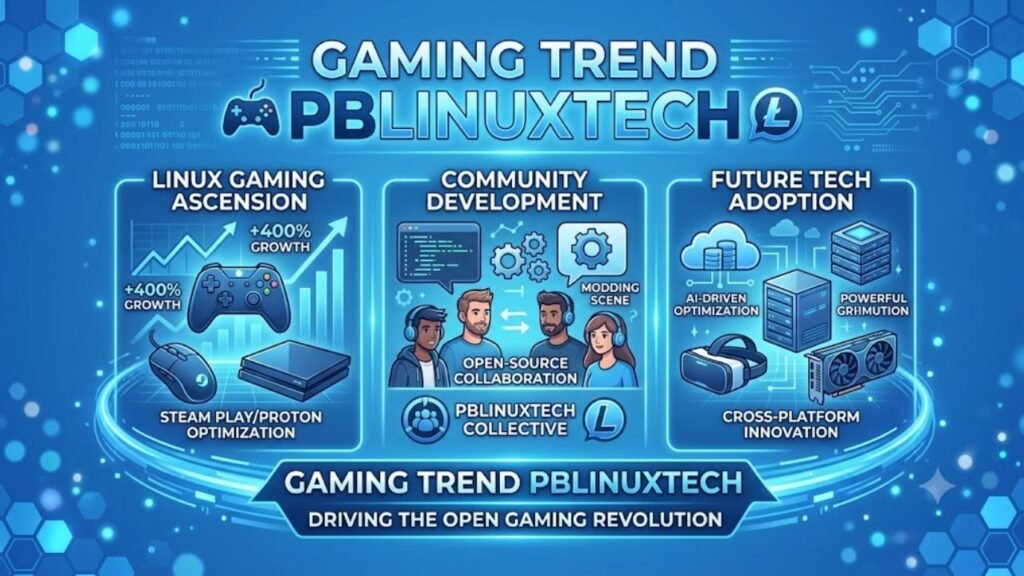
The movement blends open-source software with serious gaming ambition. Compatibility layers, GPU drivers, and community tools all feed into this ecosystem. Understanding it means understanding why Windows no longer holds the only seat at the table.
How Did Gaming Trend PBLinuxTech Start Gaining Momentum?
- Steam Deck introduced millions of casual players to Linux without them realizing it
- Proton made thousands of Windows-only titles playable without extra setup
- Open-source drivers matured faster than most gamers expected
- Handheld devices running Linux pushed adoption beyond desktop users
- Community guides lowered the learning curve for switching operating systems
| Milestone | Year | Impact on Gaming Trend PBLinuxTech |
| Proton launch | 2018 | Unlocked thousands of Windows titles |
| Steam Deck release | 2022 | Brought Linux to casual gamers |
| Anti-cheat support expands | 2023 | Reduced compatibility gaps |
| Linux Steam share surge | 2026 | Crossed 5% for the first time |
Pblinuxtech gaming news by plugboxlinux
Pblinuxtech gaming news by plugboxlinux covers the daily pulse of this movement, tracking patches, driver updates, and hardware announcements. It’s the kind of coverage that keeps players from missing something important between updates.
What sets this coverage apart is the focus on plain, useful explanations. No jargon walls, no filler. Just what changed, why it matters, and how it touches your setup running the gaming trend pblinuxtech ecosystem daily.
What Kind of Stories Does This Coverage Usually Include?
- Driver releases from GPU makers affecting Linux performance
- Proton version updates and which games improved
- Kernel changes that impact frame timing and latency
- Distro comparisons for gaming-focused builds
- Community discoveries around tweaks and fixes
Video game news pblinuxtech
Video game news pblinuxtech keeps players updated on releases, patches, and studio decisions that affect Linux compatibility. This matters because a single patch can break or fix a title overnight.
Staying current here saves frustration later. You avoid installing something that won’t run properly, and you catch fixes the moment they land. It’s a small habit that pays off constantly for anyone serious about their setup.
Video games pblinuxtech
Video games pblinuxtech refers to the specific titles and genres thriving inside this ecosystem right now. Indie darlings, strategy games, and even some AAA releases now run beautifully without extra fuss.
The list keeps growing every month as more studios test builds against Proton. That growth is exactly why so many players are paying closer attention to what launches next within this space.
| Genre | Linux Compatibility Level | Notes |
| Indie platformers | Excellent | Often native support |
| Strategy games | Very good | Runs smoothly via Proton |
| Competitive shooters | Mixed | Anti-cheat limits some titles |
| Open-world AAA | Good | Improving steadily each year |
Trends pblinuxtech
Trends pblinuxtech points to the bigger patterns shaping where this movement heads next. Cloud integration, AI-assisted optimization, and hardware partnerships all feed into what comes next for players.
These trends don’t move in isolation. They build on each other, and that’s what makes this moment feel different from earlier attempts at Linux gaming adoption over the past decade.
Evolution of Linux Gaming Ecosystem
The Linux gaming ecosystem didn’t happen overnight. It took years of small fixes, community patience, and slow but steady studio buy-in to reach where things stand today.
Every layer, drivers, compatibility tools, and distros, improved in tandem. That coordinated growth is why gaming trend pblinuxtech feels stable now instead of experimental, unlike earlier years when things constantly broke.
- Early 2010s: Native Linux titles were rare and often unstable
- Steam for Linux: Opened the door to a real catalog
- Proton’s arrival: Changed the compatibility conversation entirely
- Gaming distros: Bazzite and CachyOS simplified setup for newcomers
- Handheld boom: Normalized Linux without users even noticing
Performance Optimization in Modern Gaming
Performance tuning on Linux has come a long way from manual tweaks and forum guesswork. Today’s tools make optimization approachable even for people who’ve never touched a terminal before.
This matters because raw performance is often the deciding factor for switching. When a system runs cooler, faster, and quieter, that’s a hard argument to ignore for anyone chasing smoother frame rates.
What Are the Best Performance Tools for Gaming Trend PBLinuxTech Setups?
- MangoHud for real-time performance overlays
- GameMode to prioritize CPU resources during play
- Low-latency kernels for reduced input lag
- Custom Proton-GE builds for tricky titles
- CPU governor tweaks to balance power and speed
Compatibility Layers and Game Accessibility
Compatibility layers like Proton and Wine remain the backbone of this entire trend. Without them, most of what makes Linux gaming viable simply wouldn’t exist for everyday players.
Accessibility has improved massively because of this. Titles that once required hours of manual configuration now launch with a single click, making the barrier to entry lower than it’s ever been before.
Cloud Gaming Integration
Cloud gaming sidesteps a lot of the old Linux compatibility arguments entirely. When the game runs on a remote server, the operating system underneath matters far less than it used to.
Services streaming directly to Linux desktops give players access to demanding titles without needing top-tier hardware. That flexibility is quietly expanding the reach of gaming trend pblinuxtech far beyond desktop enthusiasts.
What Makes Gaming Trend PBLinuxTech Different From Traditional Gaming Setups?
Traditional setups lock you into one vendor’s rules and updates. This trend flips that, giving players control over their kernel, drivers, and even how their system boots.
That freedom appeals to people tired of forced updates and background bloat. It’s a different philosophy entirely, one built around choice rather than convenience handed down by a single company.
Indie Game Development and Open Source Growth
Indie developers have embraced Linux faster than almost anyone else in the industry. Engines like Godot make cross-platform builds simple, removing a major excuse studios once had for skipping Linux support.
Open-source growth feeds this cycle directly. As more tools become freely available, smaller teams can ship polished titles without massive budgets, strengthening the entire video games pblinuxtech catalog along the way.
| Tool | Purpose | Popularity Among Indie Devs |
| Godot | Cross-platform engine | Rapidly growing |
| Unity (Linux export) | Multi-platform builds | Widely used |
| Blender | Asset creation | Industry standard |
| Itch.io | Distribution | Popular for indie launches |
Hardware Drivers and GPU Support
GPU support used to be the weakest link in Linux gaming. That’s changed dramatically as major manufacturers now ship drivers built with gaming performance as a priority, not an afterthought.
Better drivers mean fewer crashes and more consistent frame rates. This single improvement has done more for adoption than almost any other factor tied to this movement’s recent growth.
Why Are More Gamers Switching to Linux in 2026?
The switch makes sense once you weigh the numbers. Better performance, no forced bloatware, and growing compatibility all point in the same direction for frustrated Windows users.
Privacy concerns play a role too. Many gamers simply want more control over what runs in the background, and Linux delivers that without sacrificing the games they already love playing.
Community-Driven Development
Community involvement remains one of the strongest forces behind this movement’s staying power. Forums, tutorials, and shared benchmarks help newcomers skip months of trial and error entirely.
This support system creates loyalty. People stick around because they feel like part of something building together, not just consuming a product handed down from a distant corporate team.
- Active forums solving compatibility issues within hours
- Shared benchmark databases for hardware comparisons
- Volunteer-maintained compatibility lists for thousands of titles
- Discord communities offering real-time troubleshooting help
- Open bug trackers where fixes ship transparently
How Does Video Games PBLinuxTech Improve Everyday Gameplay?
Everyday gameplay benefits from lower system overhead and fewer background interruptions. Loading times shrink, stutters reduce, and the whole experience feels noticeably more responsive during long sessions.
Players also report better battery life on handhelds running Linux. That efficiency stretches gaming sessions further, which matters a lot for anyone gaming on the go regularly.
Performance Comparison Overview
Comparing raw performance numbers helps cut through the hype surrounding this trend. In many benchmarks, Linux now matches or beats Windows in specific titles, especially older ones running through Proton.
| Metric | Windows | Linux (Proton) |
| Average frame stability | Good | Comparable or better |
| Boot time | Moderate | Faster |
| Background resource use | Higher | Lower |
| Battery life (handhelds) | Standard | Often improved |
Which Linux Distros Are Best for Gaming Trend PBLinuxTech Fans?
Distro choice matters more than people expect when chasing smooth performance. Gaming-focused builds strip away unnecessary bloat and ship pre-configured with the tools most players need immediately.
Bazzite and CachyOS have become favorites for exactly this reason. Both prioritize gaming out of the box, saving new users from spending hours configuring settings manually before their first launch.
Future of Gaming Innovation
Looking ahead, AI-driven optimization and smarter anti-cheat compatibility are set to define the next chapter. These advances will likely close remaining gaps that still frustrate competitive players today.
Hardware manufacturers are paying closer attention too. As more devices ship with Linux pre-installed, the innovation cycle accelerates, pulling gaming trend pblinuxtech further into mainstream conversations across the industry.
What Should Beginners Know Before Trying Video Games PBLinuxTech?
Beginners should start with a gaming-focused distro rather than a general-purpose one. This removes a lot of early confusion around drivers, launchers, and basic configuration steps.
Patience helps too. Not every title works perfectly on day one, but checking compatibility databases beforehand saves a lot of unnecessary troubleshooting during those first few gaming sessions.
Esports and Competitive Gaming Expansion
Esports remains the toughest frontier for this movement. Anti-cheat software still blocks several major competitive titles, though progress here has been steady over the past couple of years.
Despite those gaps, competitive players increasingly favor Linux for its lower latency and tighter system control. That edge matters in high-stakes matches where every millisecond genuinely counts toward victory.
Frequently Asked Questions
What does gaming trend pblinuxtech actually mean?
Gaming trend pblinuxtech describes the growing shift of gamers adopting Linux systems for better performance, control, and flexibility during everyday play.
Is Linux gaming reliable for daily use now?
Yes, thanks to Proton and mature drivers, gaming trend pblinuxtech setups now run reliably for most casual and mid-range titles without constant troubleshooting.
Can competitive gamers rely on this trend yet?
Partially. Gaming trend pblinuxtech still faces anti-cheat limitations in some competitive titles, though support keeps expanding across major game studios.
Which tools support video games pblinuxtech the most?
Proton, Wine, MangoHud, and GameMode form the backbone tools that keep gaming trend pblinuxtech running smoothly across different hardware setups.
Do indie developers benefit from this movement?
Absolutely. Open-source engines make it easy for small studios to support gaming trend pblinuxtech audiences without needing large development budgets.
Will cloud gaming replace the need for this trend?
Not entirely. Cloud gaming complements gaming trend pblinuxtech by reducing hardware dependency, but local performance gains still matter for many players.
Is switching to Linux worth it for casual gamers?
For most casual gamers, yes. Gaming trend pblinuxtech offers smoother performance and fewer background distractions compared to traditional setups.
Conclusion
Gaming trend pblinuxtech has moved past the experimental phase and into everyday reality for millions of players. From better drivers to smarter compatibility layers, every piece of this ecosystem keeps maturing at a pace few expected just a few years back. Video games pblinuxtech continues expanding its catalog, proving that performance and flexibility don’t have to be a trade-off anymore.
Whether you’re chasing better frame rates, more control, or simply curious about trying something different, this movement offers a genuinely solid path forward. The momentum behind gaming trend pblinuxtech isn’t slowing down, so there’s never been a better moment to see what your own setup could look like on Linux.

Alex Carter is a technology writer covering AI, software, cybersecurity, and digital trends, delivering expert insights and practical guides.