

The digital footprints we leave behind tell a story, but not always the full one. A cyberbackground check has become the modern standard for separating online noise from verifiable truth. Whether you are safeguarding your business or trying to protect your personal reputation, understanding a cyber background check is no longer optional it is a critical tool for survival in a hyper-connected world.
Every click, profile, and public record feeds into a massive web of personal data that defines your digital identity. Navigating this landscape requires clear insights to ensure accuracy, privacy, and security. This ultimate guide breaks down exactly how a cyberbackground screening works, why it matters to you, and how to handle the results with complete confidence.
What Exactly Is a Cyber Background Check?
A cyberbackground check is an in-depth investigation that aggregates an individual’s digital history, public records, and online behavior into a single cohesive profile. Unlike traditional screenings that only look at physical paperwork, this digital-first approach scours the internet to paint a comprehensive picture of someone’s past and present character.
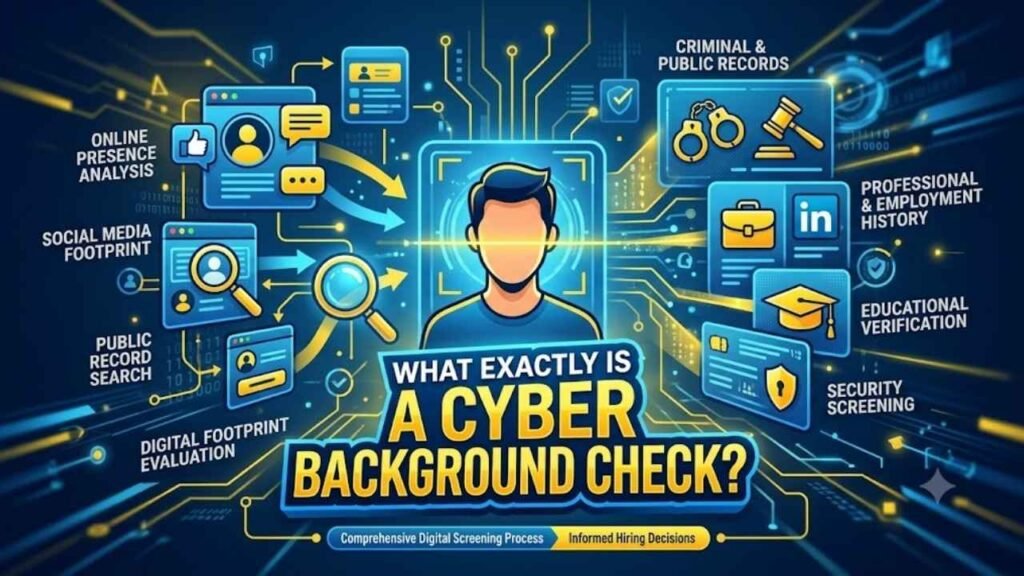
In today’s fast-paced environment, a cyber background check acts as a mirror reflecting an individual’s true digital identity. It bridges the gap between real-world credentials and online actions, pulling data from sources that older screening methods routinely miss or ignore entirely.
Why Are Cyber Background Checks So Popular Now?
The exponential rise of remote work and online interactions has made digital verification absolutely essential. Trust is harder to build over a screen, pushing organizations to rely on a cyberbackground assessment to verify that the person on the other end of an email or video call is exactly who they claim to be.
Furthermore, public safety and digital security concerns have evolved rapidly over the last decade. A comprehensive cyber background check offers peace of mind by identifying hidden red flags, fraudulent identities, and historical inconsistencies before they cause real-world financial or emotional damage.
| Driving Factor | Shift in Behavior | Emotional Impact |
|---|---|---|
| Remote Proliferation | Hiring across borders without meeting face-to-face. | Anxiety over identity theft and corporate fraud. |
| Social Media Footprints | Publicly accessible personal posting histories. | Fear of reputational damage from toxic behavior. |
| Data Accessibility | Centralized digital databases and public registries. | Relief through fast, accurate character confirmation. |
How Does a Cyber Background Check Work?
Understanding the underlying mechanics of a cyberbackground evaluation demystifies how scattered digital footprints become structured information. The process relies on sophisticated software algorithms working alongside human researchers to piece together a clear timeline of an individual’s life.
Every modern cyber background check moves through three distinct phases to ensure the final profile is both comprehensive and highly accurate. By breaking down this process, you can better understand where your data lives and how it is interpreted by external screening platforms.
1. Data Aggregation: The Digital Detective Work
The first step of a cyberbackground search involves collecting raw data from thousands of disparate digital sources simultaneously. Automated crawlers scan public county records, criminal registries, historical court filings, and deep-web open-source intelligence databases to gather raw informational assets.
During this stage, a cyber background check looks far beyond standard search engine results to find obscured data points. The focus centers on building a massive repository of raw facts, linking phone numbers, addresses, and usernames back to a single primary identity.
- Public Court Records: Local, state, and federal criminal case filings.
- Asset Registries: Property ownership deeds, corporate filings, and vehicle registrations.
- Digital Footprints: Historic social profiles, forum activity, and associated domain registrations.
2. Verification: Separating Fact from Fiction
Raw data is notoriously messy, which is why a cyberbackground protocol requires a rigorous cross-referencing phase. Algorithms and expert analysts check the gathered data points against official government databases to filter out cases of mistaken identity or outdated information.
Without this step, a cyber background check could easily confuse two people with identical names living in the same state. Verification ensures that every single entry on the final document belongs explicitly to the target subject, protecting innocent individuals from unfair automated errors.
3. Analysis & Reporting: The Final Dossier
Once the data is verified, it is compiled into an organized, easy-to-read document known as the final screening report. This file synthesizes criminal histories, credit data, and professional milestones into distinct chronological chapters that provide immediate clarity to the reader.
The ultimate value of a cyberbackground report lies in its actionable nature. Rather than handing over a mountain of confusing code or raw data links, the system provides a clean, compliant summary designed to help users make informed decisions without second-guessing.
What Are the Most Common Mistakes Found on a Cyber Background Check?
Even the most advanced digital systems are prone to human entry errors and data corruption. Inaccurate credit reporting, mixed files caused by identical names, and outdated expunged records frequently pop up during a standard cyberbackground verification process, causing unnecessary panic for applicants.
When a cyber background check surfaces incorrect data, it usually stems from a local county court clerk mistyping a single digit or failing to update a case disposition online. These clerical errors can make a dismissed charge look like an active conviction, highlighting why regular self-monitoring is so vital.
| Common Data Error | Root Cause | Immediate Solution |
|---|---|---|
| Identity Mismatch | Shared common names or similar Social Security numbers. | Submit a formal dispute with official identity proofs. |
| Outdated Records | Courts failing to log dismissed or expunged cases. | Provide certified court disposition letters directly. |
| Fraudulent Activity | Unresolved identity theft altering financial profiles. | Freeze affected accounts and file an identity theft report. |
Who Uses Cyber Background Checks?
From multinational corporations to neighborhood small businesses, digital screening has become a ubiquitous part of modern transaction management. Utilizing a cyberbackground check helps organizations build an ironclad layer of defense against liability, internal theft, and toxic workplace environments.
The modern application of a cyber background check extends far beyond the human resources office. Today, it serves as a foundational element for establishing trust in high-stakes environments where financial investments, sensitive proprietary data, and human safety are on the line.
Employers: Avoiding Costly Hiring Mistakes
Hiring managers leverage a cyberbackground search to verify resume claims and ensure workplace safety for their existing teams. A bad hire can cost a company thousands of dollars in lost productivity and legal fees, making upfront digital due diligence a financial necessity.
By running a compliant cyber background check, employers look past curated interview answers to view an applicant’s documented professional track record. This process confirms past employment dates, technical certifications, and educational degrees while scanning for past workplace behavioral liabilities.
Businesses (B2B Checks): Vetting Partners & Vendors
In the corporate business-to-business world, running a cyberbackground assessment on potential partners prevents devastating supply chain disruptions. Companies must ensure that vendors are financially stable, legally compliant, and free from active regulatory sanctions before signing long-term contracts.
A business-focused cyber background check evaluates corporate entity health, executive leadership histories, and past litigation records. This proactive step shields an organization from entering into contracts with fraudulent shell companies or legally compromised enterprises.
How Can Individuals Clean Up Their Online Cyberbackground Profile?
If you are worried about what a personal cyberbackground check might reveal to an employer, you can take active control of your public digital profile. Cleaning up your digital footprint requires a methodical approach to removing outdated accounts, locking down privacy settings, and erasing public data broker listings.
The first step in fixing your cyber background check profile is conducting a thorough self-audit across major people-search websites. Removing your data from these public aggregators lowers the chances of third-party systems scraping incorrect or highly sensitive personal details about your private life.
- Opt-Out of Data Brokers: Submit formal removal requests to sites like Whitepages, Spokeo, and Radaris.
- Audit Social Privacy: Switch personal profiles to private and delete historic posts containing controversial language.
- Remove Unused Accounts: Delete old forums, blogs, and shopping profiles that host your old personal contact information.
The Legal Side: Are Cyber Background Checks Ethical?
The power to instantly access an individual’s life history raises profound ethical and legal questions regarding consumer privacy rights. Balancing the safety needs of an organization with a consumer’s right to digital privacy requires strict legal boundaries to prevent systemic discrimination and bias.
To keep a cyberbackground check fair, regulatory frameworks dictate exactly how data can be sourced, stored, and utilized. Understanding these legal boundaries protects everyday consumers from invasive surveillance while allowing legitimate screening companies to operate safely within the law.
Compliance with FCRA (Fair Credit Reporting Act)
Any cyberbackground screening used to determine housing, employment, or credit eligibility must strictly adhere to the Fair Credit Reporting Act (FCRA). This federal law protects consumers by requiring explicit written consent before a background screening can be initiated by an organization.
Furthermore, if a cyber background check reveals negative information that results in a denied application, the consumer has an absolute legal right to review the report. They are granted a specific window of time to dispute inaccuracies before a final adverse action decision can be permanently enacted.
Which Red Flags Do Screeners Look For in Digital Footprints?
When analysts evaluate a candidate’s cyberbackground history, they look for specific behavioral patterns that indicate future compliance risks. Unexplained employment gaps, sudden inconsistencies in identity documentation, and historical patterns of workplace harassment serve as primary indicators of potential trouble.
A specialized cyber background check also looks at how a candidate behaves within digital communities. Publicly advocating for illegal acts, sharing proprietary corporate data from past employers, or displaying overt discriminatory behavior online will instantly disqualify an applicant from high-security roles.
| Identified Red Flag | Potential Risk Factor | Operational Threat Level |
|---|---|---|
| Identity Variations | Mismatched aliases, addresses, or falsified credentials. | High — Indicates potential fraud or identity theft. |
| Undisclosed Convictions | Unreported violent crimes or financial theft records. | Critical — Poses direct workplace safety hazards. |
| Data Leakage History | Sharing confidential company info on public forums. | High — Threatens corporate intellectual property. |
What Are the Key Differences Between Traditional and Cyber Screenings?
The transition from traditional analog record-pulling to an automated cyberbackground search has fundamentally altered the turnaround times and depth of modern background investigations. Traditional screenings rely heavily on physical mail requests and manual court runner visits, which can take weeks to complete.
Conversely, an advanced cyber background check harnesses the speed of cloud computing and API data feeds to deliver comprehensive insights within hours. While traditional checks excel at local accuracy, cyber checks offer a globalized view of a person’s entire digital presence across multiple jurisdictions simultaneously.
How Long Do Historical Records Stay on a Digital Report?
Many individuals worry that a minor mistake from their youth will haunt their digital cyberbackground profile indefinitely. Fortunately, federal and state laws impose strict time limits on how long older negative information can be reported on official consumer background verifications.
Under FCRA regulations, most negative financial data and civil judgments drop off a standard cyber background check after seven years, while bankruptcies can remain visible for up to ten years. However, criminal convictions can stay on a record indefinitely in many states, depending on the salary tier of the position being sought.
- Seven-Year Rule: Tax liens, civil suits, and collection accounts generally clear after seven years.
- Bankruptcy Listings: Chapter 7 bankruptcies remain visible for a maximum of ten years.
- Criminal Convictions: Often remain permanently unless sealed, expunged, or restricted by state-specific laws.
FAQs
What shows up first on a basic cyberbackground check?
A standard search displays verified criminal histories, recent addresses, known aliases, and past employment confirmations. The primary goal of a cyberbackground check is establishing identity validity.
How can I run a personal cyberbackground check on myself safely?
You can order a self-check through an FCRA-compliant screening platform to see what companies view. Monitoring your own cyberbackground data regularly prevents unexpected employment surprises.
Does an expunged criminal record appear on a cyberbackground screening?
Legally expunged records should be wiped from compliant databases and not show up on a cyberbackground report. If an expunged item appears, you can file an immediate legal dispute.
Can a cyberbackground check view my private social media messages?
No, compliant screenings only access publicly available information and cannot log into private messaging accounts. A legal cyberbackground evaluation respects basic digital access permissions.
How long does a standard cyberbackground check take to complete?
Most digital screenings take between 24 to 72 hours depending on court database speeds. A modern cyberbackground system automates data retrieval to maximize turnaround efficiency.
What should I do if my cyberbackground report contains mixed files?
You should immediately notify the screening company and submit a formal dispute with supporting documentation. Correcting a flawed cyberbackground file usually takes less than thirty days.
Why do companies prefer a cyberbackground check over manual courthouse searches?
Digital searches offer broader geographic coverage and faster results for modern remote hiring workflows. Utilizing a cyberbackground system saves human resource teams valuable administrative time.
Conclusion
Navigating the complexities of digital footprints requires a modern approach to identity verification and reputation management. A thorough cyberbackground check bridges the gap between raw web data and actionable truth, ensuring that organizations can hire safely while individuals protect their personal information from systemic errors. By understanding how a cyber background check functions, you gain the power to audit your own data, correct historical court mistakes, and present your absolute best self to the digital world.
Staying proactive is your best defense against data inaccuracy. Take the time to run a personal cyberbackground check on yourself today to ensure your public digital profile aligns perfectly with your real-world achievements.

Alex Carter is a technology writer covering AI, software, cybersecurity, and digital trends, delivering expert insights and practical guides.